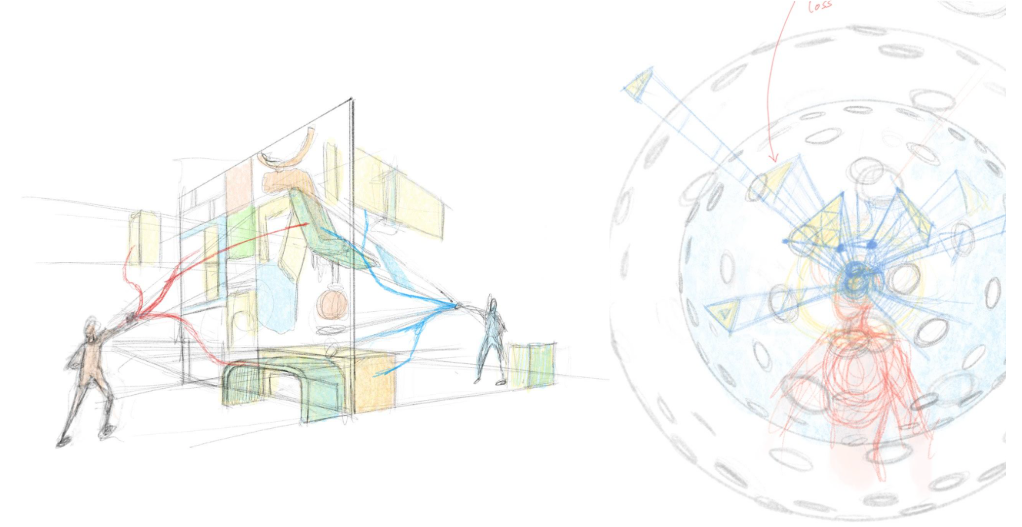
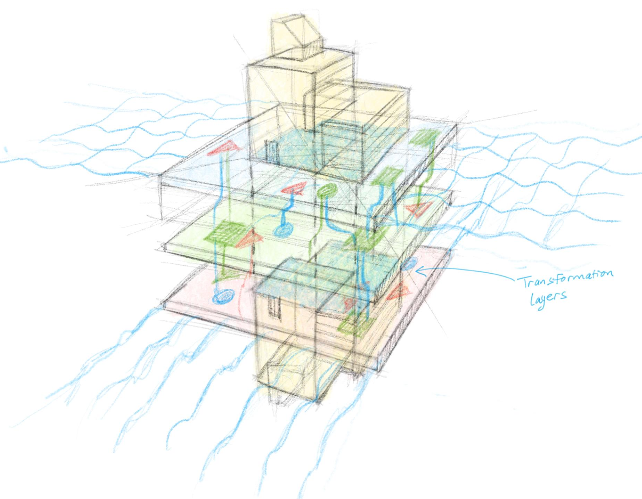
The Problem
How can a R&D department in a Fortune 100 rganization explore fast-moving technologies—such as AI, robotics, and adaptive environments—while staying grounded in human needs, ethics, and real-world deployment?
Internal teams were advancing parallel initiatives, often collaborating and occasionally competing across departments. There was a need for shared perspective, external insight, and a clearer narrative to help position internal services across the organization.
The Solution
Members for designed and facilitated a series of executive, salon-style workshops for a global technology firm’s R&D group, convening a curated network of experts from the private sector, public institutions, academia, and cultural research.
Rather than product reviews, the sessions focused on dialogue and synthesis—creating a structured environment for exploring how emerging technologies shape people, places, and organizations. Insights from these conversations were captured, organized, and translated into a strategic internal report used by the R&D team to inform positioning, collaboration, and future research directions.
Key Exploration Categories
- People & Agency
Balancing automation with autonomy, trust, and human judgment in intelligent environments. - Data & Ethics
Purpose-driven data collection, privacy, bias, and the role of transparency in building trust. - Experience & Interfaces
New forms of interaction including AR/MR, ambient displays, and perceptible data experiences. - Infrastructure & Systems
Sensors, networks, edge/cloud computing, and the long-term implications of embedded technology. - Scale & Sustainability
How intelligent environments move from pilots to durable, adaptable systems that reduce waste and support wellbeing.
Selected Highlights & Themes
- Intelligent environments must prioritize people over systems, with technology supporting—not replacing—human agency.
- “More data” is not inherently better; value comes from selective, purposeful data tied to outcomes.
- AR, AI, and robotics enable personalization and adaptability, but require new governance models.
- Trust, ownership, and authorship are foundational to adoption—especially in shared environments.
- Scaling innovation in the built environment is slow by nature; flexibility and long-term adaptability matter more than perfection.