

25 Broadway 10th Floor
New York, NY 10004



The Problem
How do we reverse long-term decline in bus patronage while meeting national goals for sustainability, inclusion, and wellbeing?
Across Wales, bus usage had been declining for over a decade, impacting revenue, service quality, and public confidence. To meet the ambitions of the Well-being of Future Generations Act, Transport for Wales needed to redesign the national bus network around real customer needs—encouraging both existing and new users to choose public and active transport.
As part of a multidisciplinary national programme, Arup led the Customer Experience workstream, focusing on understanding the end-to-end bus journey from a customer perspective and translating those insights into clear, user-centred requirements for future services.
The team conducted a mixed-method research programme engaging both current bus users and non-users. This included one-to-one remote interviews, a digital ethnography study with peer researchers, and a targeted survey—ensuring representation across age, gender, transport behaviours, and diverse Welsh geographies. Inclusivity was prioritised through bilingual Welsh/English engagement and phone-based research for non-digitally skilled participants.
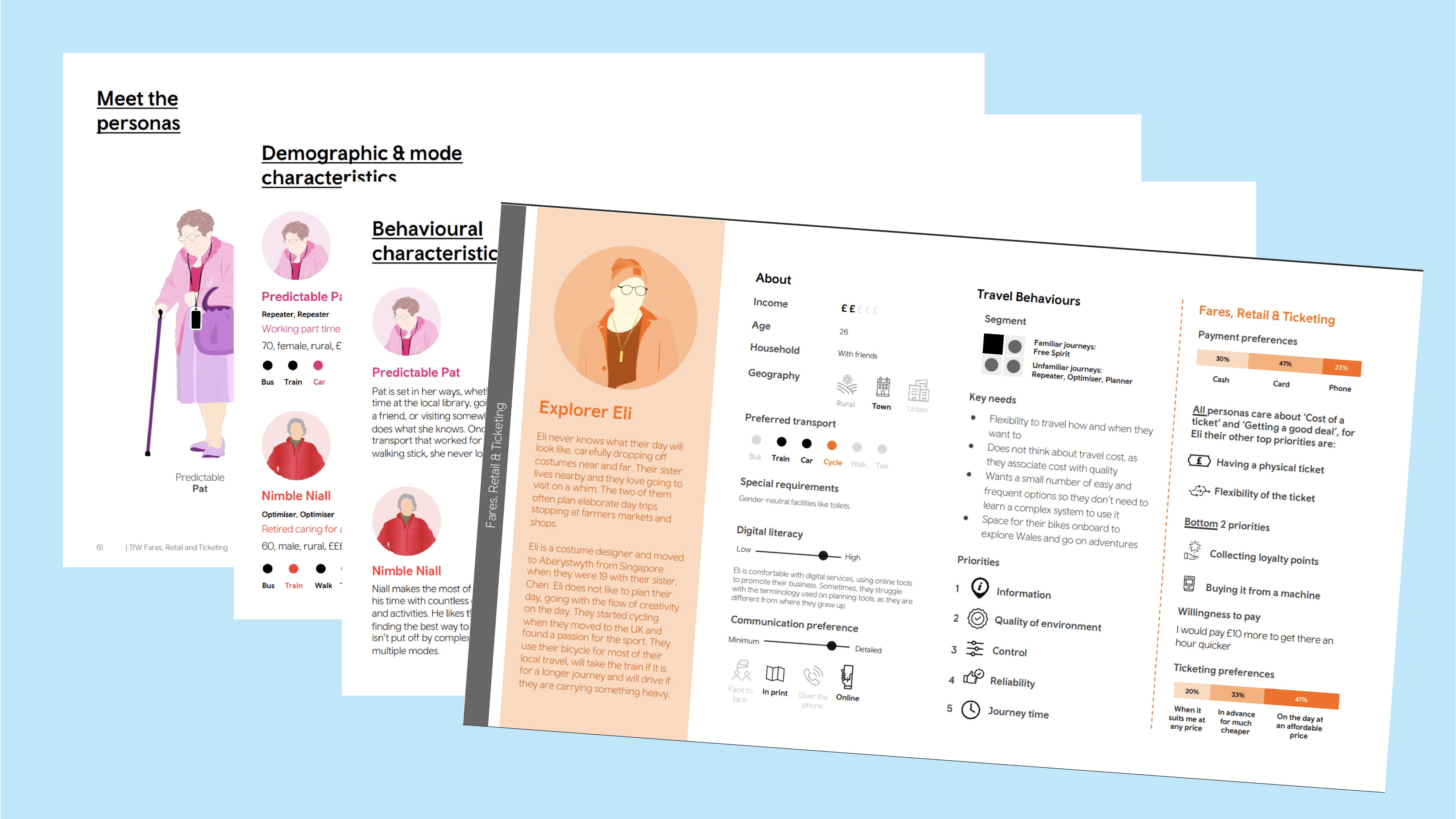
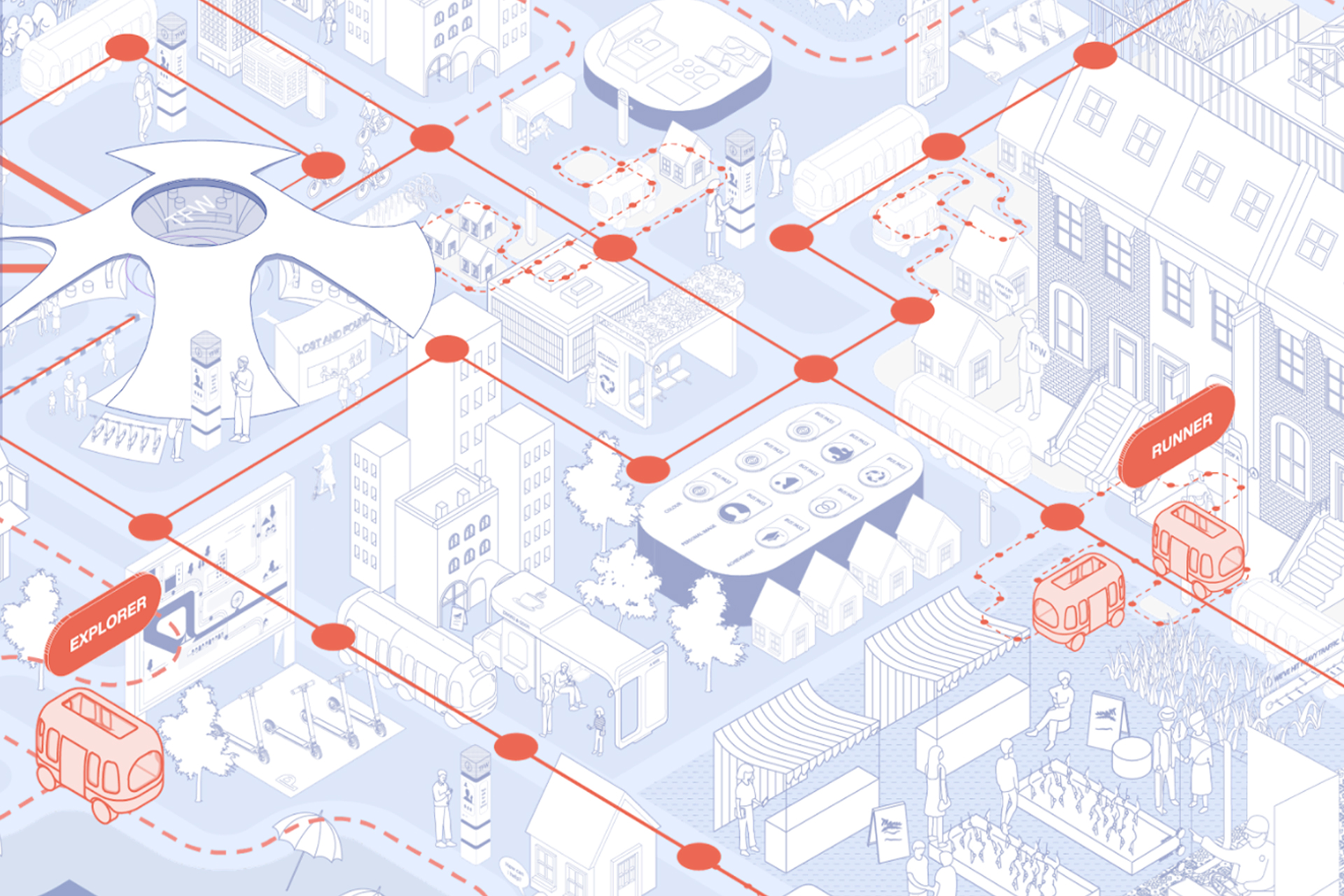
Research findings were synthesised into customer insights, segmentation models, and personas that articulated the lived bus experience and key pain points across all stages of the journey. These insights informed a clear customer experience vision for the future Welsh bus network, supported by a set of holistic design concepts addressing physical infrastructure, digital touchpoints, service information, and interactions with staff. Concepts were mapped across the customer journey and tailored to the needs of each segment.
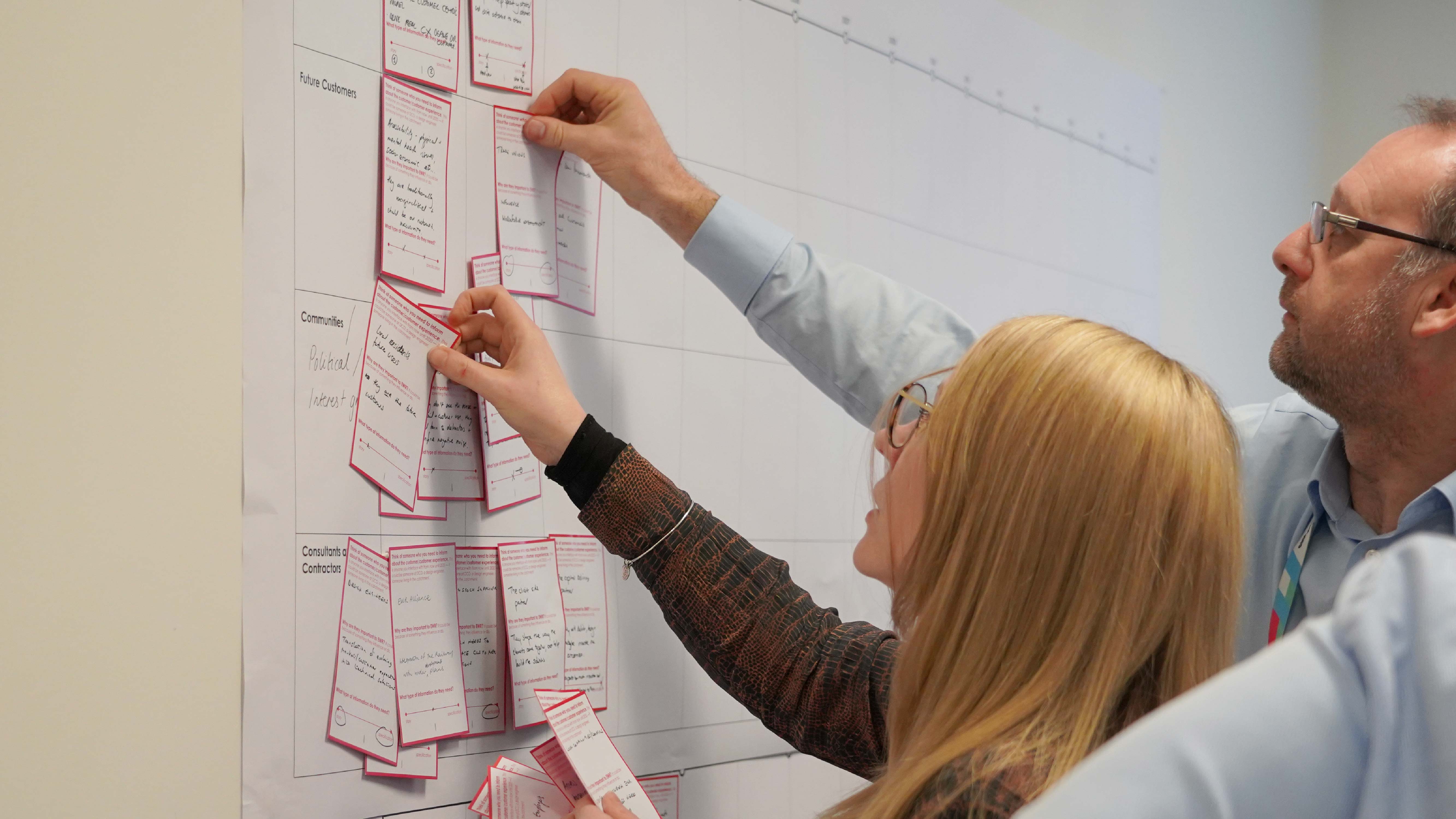
To embed customer-centred thinking across the programme, co-creation workshops were facilitated with technical design teams, ensuring insights directly influenced decisions across planning, operations, and delivery. All engagement and collaboration were successfully delivered remotely during the pandemic, using tools such as videoconferencing and Miro, alongside structured briefings for Welsh Government and Transport for Wales leadership.