



.png)
25 Broadway 10th Floor
New York, NY 10004
In brief
- NYC's new Office of Mass Engagement aims to transform public participation, but true progress requires moving beyond listening to enabling action.
- Digital tools like online portals and maps have replaced physical models, yet the gap between collecting input and delivering solutions remains.
- Effective engagement must design pathways for citizens to act and create, not just share problems.
- Cities are driven by self-interest; engagement must acknowledge conflicting needs and provide actionable options.
How would you talk to a city if you knew it might actually talk back?
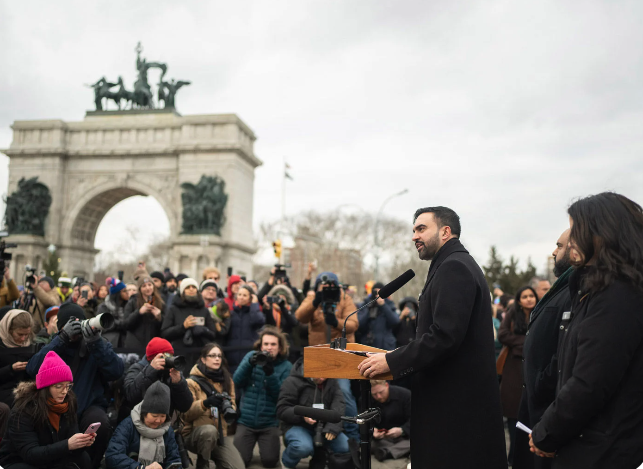
Not in slogans or complaints. Not in five-point policy decks or community board testimony. But in something more real — in the way New Yorkers actually live, work, struggle, parent, borrow, build, dodge, fall, come back, and try again. The announcement of New York’s new Office of Mass Engagement caught my attention — and not just because it sounds like a band that once opened for Arcade Fire. There’s a long and complicated history in this city of what we call engagement, which has often meant everything and nothing all at once.
Some of us remember the scale models of yesteryear — rolled into gymnasiums and community centers with miniature trees and bike lanes meant to inspire confidence, or at least silence. Today, those models have been replaced by online portals, digital maps, and town halls that come with breakout rooms and the occasional pizza stipend. In theory, it’s progress. In practice, it depends.
Because there’s a difference between engagement that organizes and engagement that solves. There’s a difference between listening and leading, between collecting grievances and designing actual options for action.
Over the last 20 years, I’ve watched cities try new approaches to this problem — bringing in new technologies, new kinds of public space, new ways of asking questions. But one truth keeps showing up: you can’t ask people what they need without being prepared to do something about the answer. And sometimes, what they need is more than any one office can give.
Cities are made up of self-interest. That’s not cynicism — it’s architecture. The parent trying to find childcare. The small business looking for foot traffic. The company wondering if they can hire locally and stay competitive. These are all legitimate needs, and they all pull in different directions.
So when we talk about mass engagement, I hope we’re not just promising better listening. I hope we’re building better paths for people to act, to start, to create, to move the city forward — not just another platform for sharing problems, but something that can help solve them.
Frequently asked questions
What is the Office of Mass Engagement in New York City?
The Office of Mass Engagement is a new city office announced by Mayor Mamdani to transform how the city engages with its residents, moving beyond traditional town halls and online portals toward more actionable participation.
How does digital engagement compare to older methods like physical models?
The article notes that while digital tools have replaced physical scale models and in-person town halls, they often fail to bridge the gap between listening and solving—engagement must be designed to produce real outcomes, not just collect feedback.
Why does the article say cities are made of 'self-interest'?
It argues that residents and businesses have legitimate but competing needs—like childcare, foot traffic, or hiring—and effective engagement must work with these tensions rather than ignore them, creating paths for collective action.
What does the article suggest is the biggest challenge for mass engagement?
The biggest challenge is moving from engagement that organizes to engagement that solves—being prepared to act on what people say, even when answers are complex or exceed one office's capacity.
Related reading
- Powered by Play: How Sport, Community, and Technology are Shaping Tomorrow's Cities
- Presentation Recap: Geneva - Getting the Measure of Baukultur
- What’s Next with Noble: Cultural Spaces & Digital Engagement
Learn more about Experience Strategy & Vision.