


.png)

.png)
25 Broadway 10th Floor
New York, NY 10004
In brief
- Digital velocity in software is colliding with the deliberate pace of physical infrastructure, creating opportunities for those who bridge the gap.
- AI and Model Context Protocol (MCP) will enable faster development, dissolve data silos, and make buildings queryable.
- At ISE, manufacturers are shifting from selling hardware to owning lifecycle performance through software ecosystems and recurring service models.
- The gap between stunning hardware and lagging software maturity remains wide, but AI-augmented teams can now reimagine systems quickly.
The Lead: Digital Velocity, Physical Gravity
Over the last few months we have been on the ground at conferences, meetups, and trade floors, watching how the built environment is trying to catch up with a world that has already shifted. Our work sits between digital systems and physical space, so these events help us see where the industry is actually moving once you sift through the snake oil and the casino style chaos of a trade show.
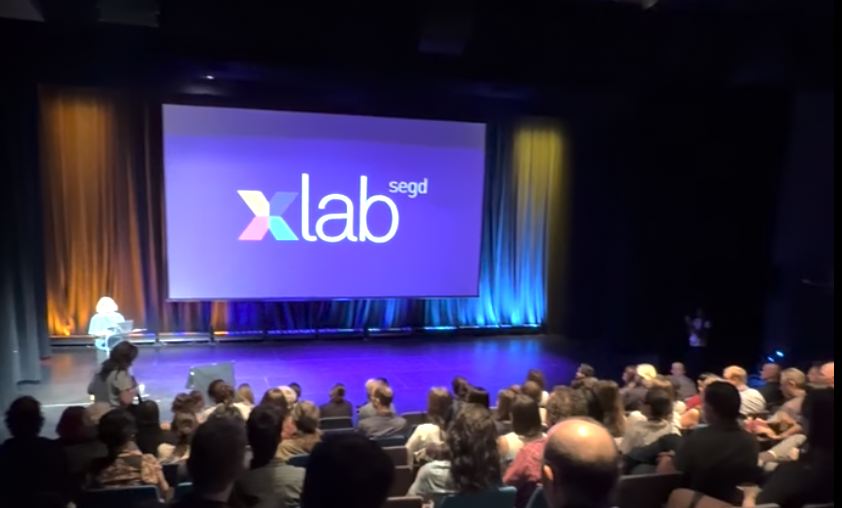
At Integrated Systems Europe in Barcelona, the global gathering for AV, digital signage, and immersive technology, Paul had the opportunity to speak on a panel at the frame:work sessions at AVIXA Xchange. The conversation centered not just on emerging technology, but on how to guide clients through change.
One recurring theme was simple: start with the use case before jumping to the technology. That discipline prevents impulsive investments that fail to solve real problems. We also discussed the importance of narrative. A clear story drives investment, inspires stakeholders, and creates long term alignment. Technology alone does not scale. Vision and content do. AI is opening new doors here, particularly in accelerating media creation and storytelling.
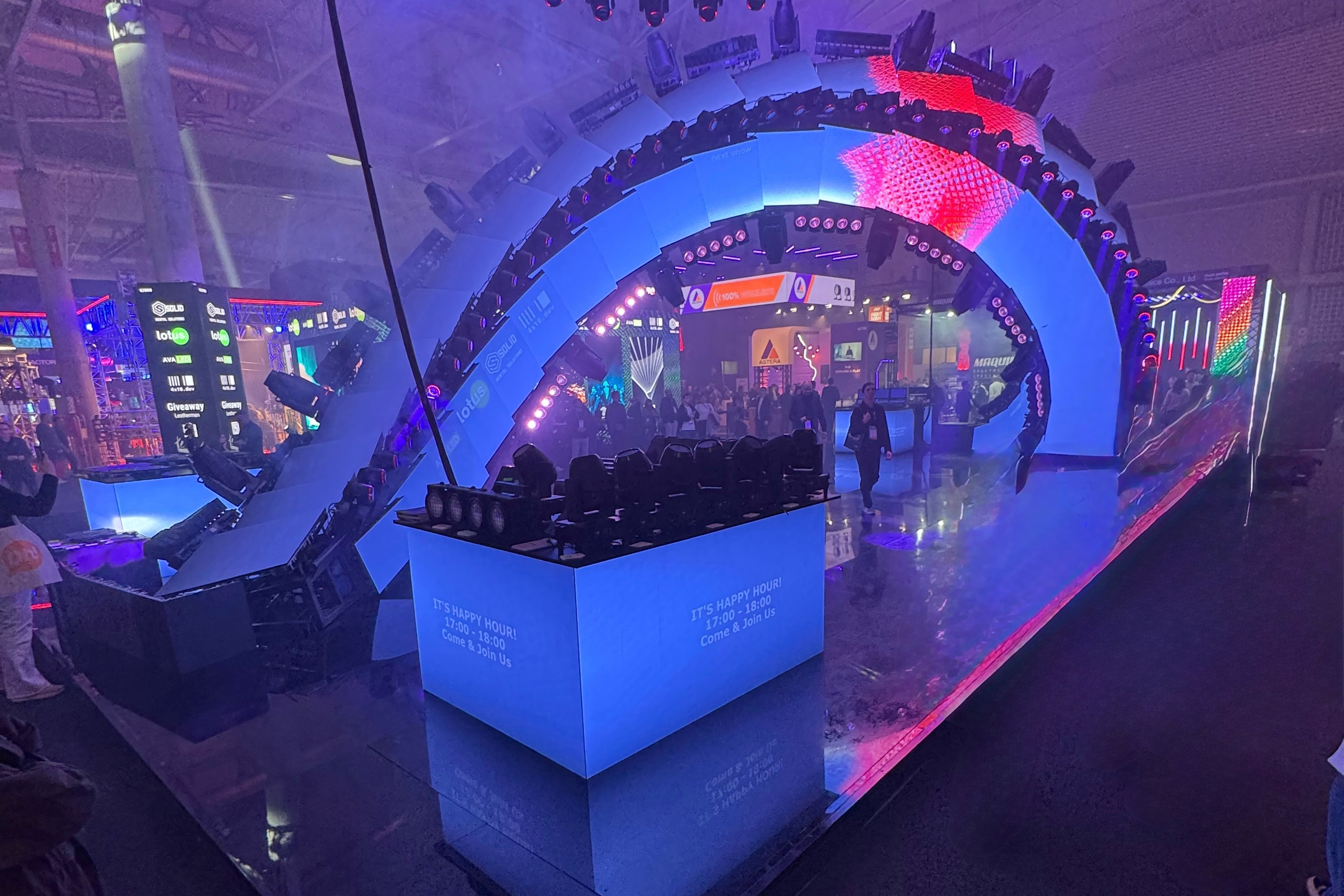
At ISE, hardware dominated. LED walls, projection, processing power. AI appeared frequently in language, but less so in true deployment. It felt like an industry testing vocabulary before investing deeply in capability.
At NRF Retail's Big Show, the tone was more outcome driven. Tracking, analytics, retail intelligence. Often the same vendors, but with very different messaging depending on the audience.
Software development, meanwhile, is compressing rapidly. AI-assisted workflows are reshaping how quickly products can be built, tested, and deployed. The line between design, product, and engineering is thinning as smaller, AI-augmented teams prototype and ship at speeds that previously required entire departments. Software once rewarded specialization. Now it rewards adaptability.
The physical world moves differently. Buildings and AV systems involve procurement cycles, integration constraints, legacy infrastructure, and operational risk. They do not refactor overnight.
Across it all, we saw two speeds colliding. Software accelerating at breakneck pace. Physical space moving deliberately, but beginning to absorb that velocity. The gap between them is not a weakness. It is an opportunity.
Signals: How AI and MCPs Will Reshape Built Environment Tech in the Next 6 Months
Much of the digital building software we see today, from digital twin platforms (buzz word alert) to content management systems, will be replicated in a fraction of the time it originally took to build. Systems that required five or ten years of development may soon be reproducible in weeks by smaller, AI augmented teams.
For decades, built environment software has often been designed by teams who did not deeply inhabit the spaces they were serving. The result is familiar: enterprise interfaces that feel clunky, overly complex, and visually dated. Operators learn to navigate them like air traffic control systems. Highly specialized. Functional. Rarely elegant.
Now introduce AI velocity.
When elite programming speed and AI assisted product development enter this domain, usability should improve rapidly. Dashboards, reporting tools, and control systems can be refactored faster. Interfaces can be tested and iterated in weeks instead of quarters. Legacy firms that embrace this shift could see meaningful gains in clarity and performance.
But here is the deeper shift.
Building systems have historically relied on obscure, highly specialized protocols and languages. In many organizations, there were one or two creative technologists who “knew the system.” Entire careers were built around knowing how to work inside:
- Proprietary BMS integrations tied to Siemens, Johnson Controls, Schneider ecosystems
- BACnet for building automation systems
- DALI for lighting control
- DMX in entertainment and architectural lighting
- Crestron SIMPL and Extron scripting for AV control
- Art-Net and sACN for networked lighting
AI systems trained on documentation, standards, and code patterns can help translate between these protocols. That does not eliminate complexity. Real-time environments remain unforgiving. Latency, failure modes, and safety still matter. But the barrier to entry is lowering.
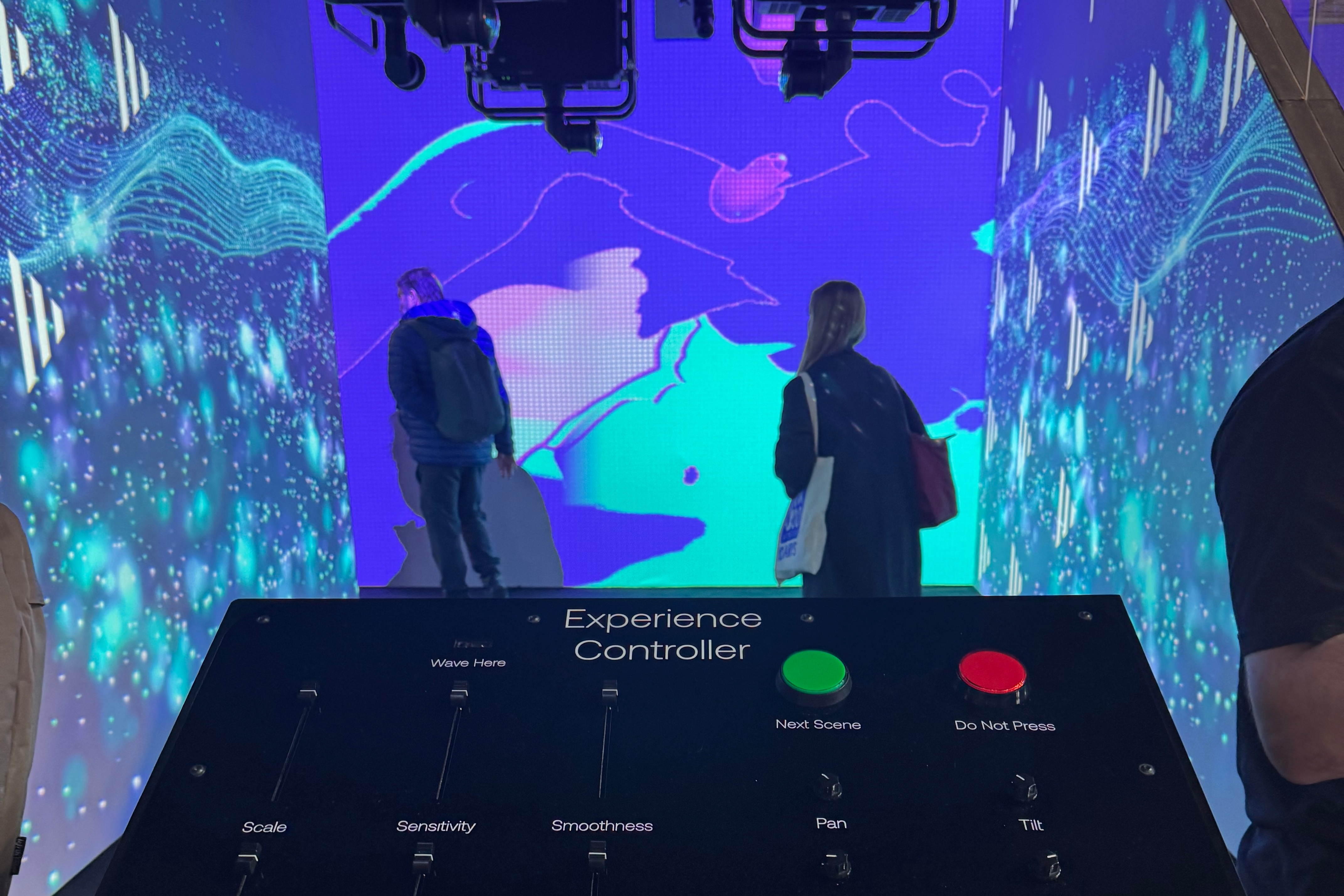
Underneath this, architecture will shift further through protocols like MCP, or Model Context Protocol. MCP acts as a standardized bridge that allows AI systems to securely access external tools, databases, APIs, and file systems. Instead of building custom integrations for every vendor and every building system, organizations can expose data through a unified layer. AI agents can read sensor data, query maintenance logs, trigger workflows, and coordinate systems dynamically.
Data silos begin to dissolve. The building becomes queryable. And this is where we will see cracks.
If your platform is tightly coupled to legacy protocols and slow integration cycles, how quickly can you re-architect? Systems that once required years of domain-specific engineering can now be reimagined by leaner teams who understand integration patterns at a higher level.
This is the pattern described in The Innovator's Dilemma by Clayton Christensen. Established firms struggle to respond to disruption because the current model is still profitable. It feels rational to protect it. Incentives reward optimization, not reinvention. But when development cycles compress from years to months, or even weeks, protection becomes a risk.
The built environment has always been slower than software. That will likely remain true. Physical space is complex. Real time systems are unforgiving. Integration across HVAC, lighting, AV, security, and occupancy data is non trivial. Which is precisely why AI enabled programmers who understand systems theory, protocol layers, and operational context will become more valuable, not less.
The next six months will not eliminate complexity. They will redistribute power. The question is no longer whether change is coming. It is whether you are redesigning as fast as the tools now allow.
Field Intel: What Caught Our Eye at ISE
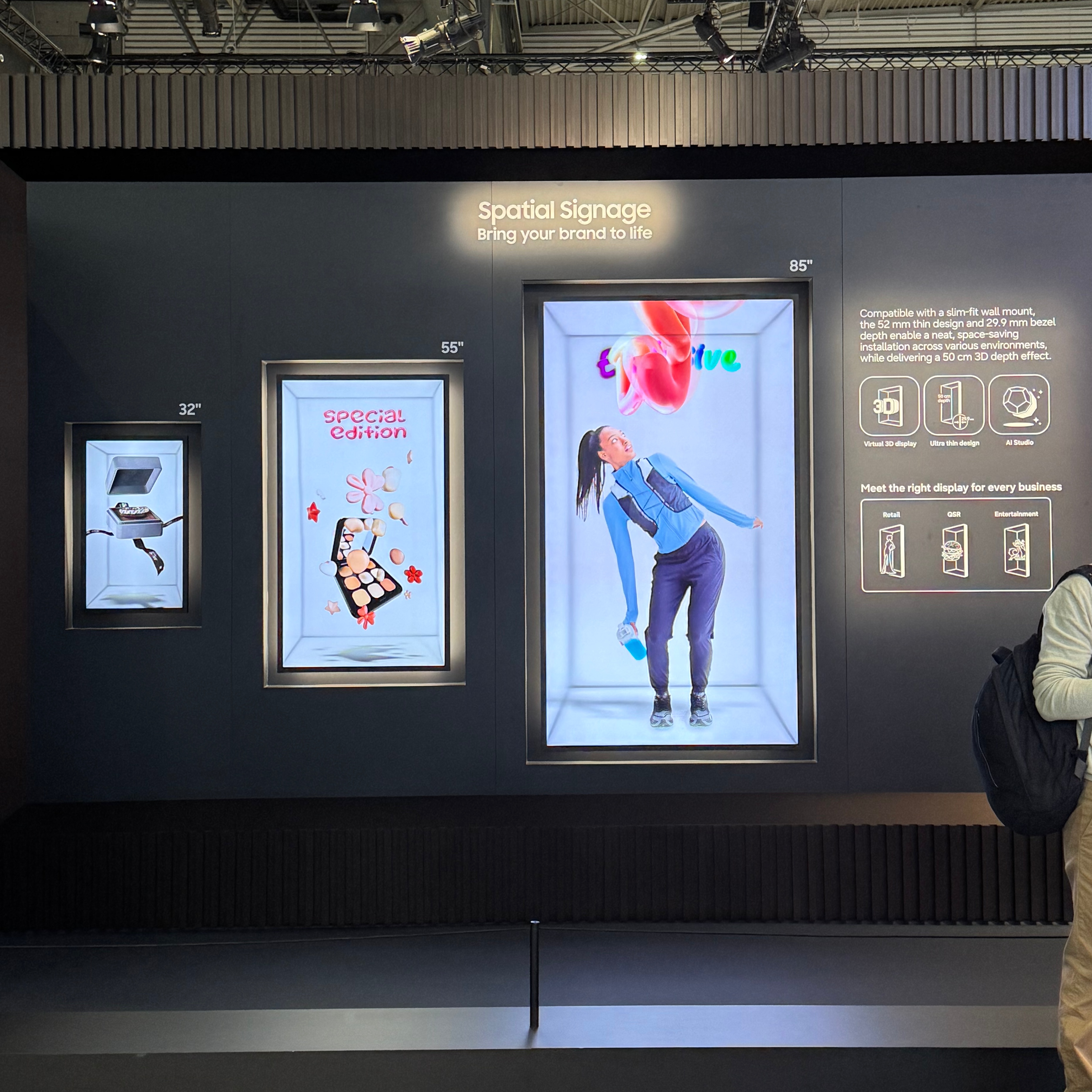
What stood out this year:
- Momentum is returning. Airports, branded experience centers, retail, sports venues, campuses, and cultural institutions are planning and spending again. The pause feels over. Capital is moving.
- AI conversations are getting practical. Less hype, more workflow. Media asset editing, personalization, reporting, and deployment speed. CMS platforms are now referencing MCP style integrations that allow conversational access to systems. In simple terms, skip the confusing interface and ask the system directly.
- LED is going architectural. Programmable façades, integrated transit surfaces, and dvLED designed into buildings from day one rather than bolted on later. The media is becoming material.
- E-ink is quietly rising. Especially for outdoor, low power, and operationally lighter deployments where LCD and LED are overkill. Sustainability may not lead the marketing, but energy efficiency is driving decisions.
- Projection continues evolving. Brighter output in smaller footprints, lower energy draw, more flexible lensing. Easier deployment for immersive and complex spatial environments.
- Software maturity still lags hardware. The displays are stunning. What runs on them is often far less sophisticated. That gap remains wide.
Deep Dive: Orchestrating the AV
The Manufacturer Pattern
Across ISE, manufacturers are repositioning around operating systems for environments, not just devices. Panels are being paired with control layers, content integration, monitoring tools, APIs, and recurring service models. The objective is not simply to sell hardware. It is to own lifecycle performance.
We see this in projectors: Panasonic is building around lifecycle stability. Cloud monitoring, unified setup platforms, media processors, and service layers designed for long term operation. Barco continues leaning into software ecosystems like CTRL, API first integration, and lifecycle support for mission critical control environments. Epson is emphasizing fleet management and centralized control across multi site projection deployments. Manageability at scale is the story.
In LED, enterprise ecosystems are emerging. In LED: Samsung is positioning around enterprise display ecosystems, device management, and integration with content and workplace systems. LG is bundling dvLED, LCD, and services into verticalized solutions for retail, workplace, transit, and public environments. Sony is framing Crystal LED within production and immersive workflows rather than as a standalone display product.
Across the category, panels are being paired with control layers, content integration, monitoring tools, and recurring service models. The objective is no longer to sell a screen. It is to own the environment lifecycle.
Meanwhile, orchestration layer players like Disguise and Pixera sit above hardware. They are not selling panels. They are selling real time control systems that connect LED, projection, and immersive content into a single operating layer. In many deployments, this is what actually runs the experience day to day.
What This Means
The competitive focus is shifting toward:
• lifecycle control
• recurring service layers
• enterprise integration
• reduced on site dependency
• long term system performance
Manufacturers are no longer competing on brightness and pixel pitch alone. They are competing on operational scope. One additional observation worth calling out:
The stack is consolidating upward. Hardware companies are moving into services. Software platforms are moving into orchestration. CMS vendors are referencing AI and MCP driven interfaces. The layers are compressing.
For owners and operators, this creates both leverage and risk. Leverage because systems are becoming more integrated. Risk because vendor lock in becomes deeper and more structural.
The quiet theme of ISE was not just better screens. It was who controls the system that runs them over time.
Upcoming: Events to Watch
Here are a few events we’re watching closely:
- Smart Cities Connect
- March 10–12, 2026 | North Carolina
- Urban infrastructure, public data systems, and cross-agency integration. As buildings become queryable and environments become programmable, city-scale orchestration will be the next proving ground.
- SXSW
- March 12–18, 2026 | Austin
Still one of the clearest signals of cultural and technological velocity. Expect heavy AI discourse, but the real question is how those ideas translate into durable physical environments beyond the demo stage. - NY Build 2026 Expo
- March 18–19, 2026 | New York City
- Where construction, infrastructure, and digital systems intersect. As AI-enabled software compresses development cycles, the construction sector will be forced to rethink how digital tools integrate upstream into design, procurement, and operations.
- Passenger Terminal Expo
- March 17–19, 2026 | London
- Airports are among the most complex operating systems in the built environment. With passenger flow, retail intelligence, security, and wayfinding converging, this is where lifecycle orchestration and real-time systems matter most.
Looking Ahead
2026 is shaping up to be a major year for global sport, with large-scale tournaments and international events putting pressure on stadiums, districts, and host cities to perform at scale. These moments expose whether venues are simply event spaces; or fully integrated systems.
In collaboration with The Place Bureau, we’ll explore how sports venues are evolving from event spaces into data-driven ecosystems. From real-time engagement to lifecycle orchestration, the question isn’t just how fans experience the game; it’s how the venue operates as a system. Sign up here.
Next month, we’ll unpack what this means for operators, brands, and cities building the next generation of sports infrastructure.
Stay tuned.
Thanks for reading. If this sparked ideas, questions, or critiques, we’d love to hear from you. Noble is committed to partnering at a system level – if your culture or civic organization is tackling similar challenges, we’d love to chat. From innovation sprints to full-scale implementations, we help translate big ideas into practical solutions.
Until next time,
Paul McConnell, Hilary McVicker, and the Noble team.
Frequently asked questions
What is the main theme of this article?
The article examines the collision between fast-moving digital systems and the slower, more deliberate physical built environment, highlighting how AI and new protocols like MCP are creating opportunities for redesign and integration.
How will AI affect building management systems?
AI can help translate between proprietary building protocols (e.g., BACnet, DALI, Crestron) and, via MCP, provide a unified query layer for sensor data, maintenance logs, and workflows, making buildings more programmable.
What trends were observed at ISE 2023?
Key trends include AI conversations becoming more practical, LED becoming architectural, e-ink rising for low-power deployments, sustainability driving efficiency, and manufacturers repositioning around ecosystem ownership.
What is the 'Manufacturer Pattern' mentioned in the article?
It refers to how companies like Panasonic, Barco, Samsung, and LG are moving from selling standalone hardware to offering integrated software ecosystems, control layers, APIs, and lifecycle service models.
Why does software maturity lag behind hardware in the built environment?
Hardware like LED walls and projection systems are stunning, but the software to manage and deliver content is often less sophisticated, partly due to legacy systems and slow development cycles.