



.png)
25 Broadway 10th Floor
New York, NY 10004
The Lead
This summer heated up faster than anyone expected. The Knicks won their first championship in 53 years. The World Cup spread across sixteen American cities, turning stadiums into temporary embassies for the world's most watched sport. Climbers scaled the Empire State Building. Pickleball took over every unused lot. All while America marks its 250th birthday.
At Noble, we think about what happens when people converge on complex places: stadiums, transit hubs, city districts. It's the thinking behind our work with the NY Mets and NASCAR venues nationwide, and what we shared with team leaders at SEAT in Charlotte last week.
Sports districts now run year-round, not just on game days. Teams are investing in neighborhood infrastructure. Planners are designing for participation, not just spectatorship. Stadiums are being built with data systems that rival civic infrastructure. The venue is one of the oldest architectural challenges: an excited crowd, fixed seats, a single purpose. Every event this summer tested those assumptions. Urban stadiums with rail access outperformed suburban ones. Venues built around car access failed their fans before kickoff. All while pop up spaces pulled in most of us who cant afford a $4,000 ticket.
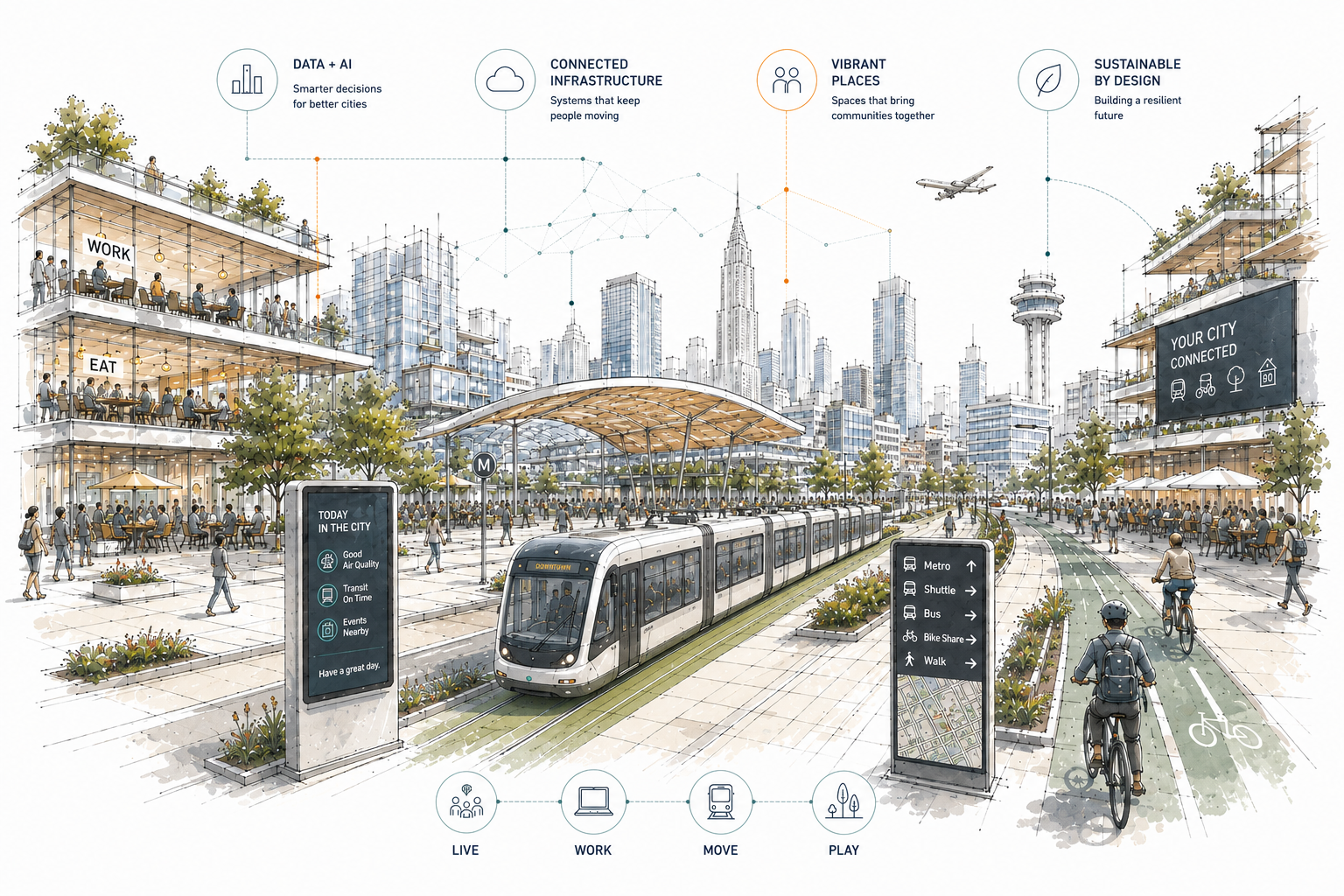
The real question: what does it take to move people well? Not just through a turnstile, but across the full arc of an experience, from airport arrival to a city activation to the event itself to the journey home.
Field Intel
Sports Movement Across the Nation
Knicks | New York
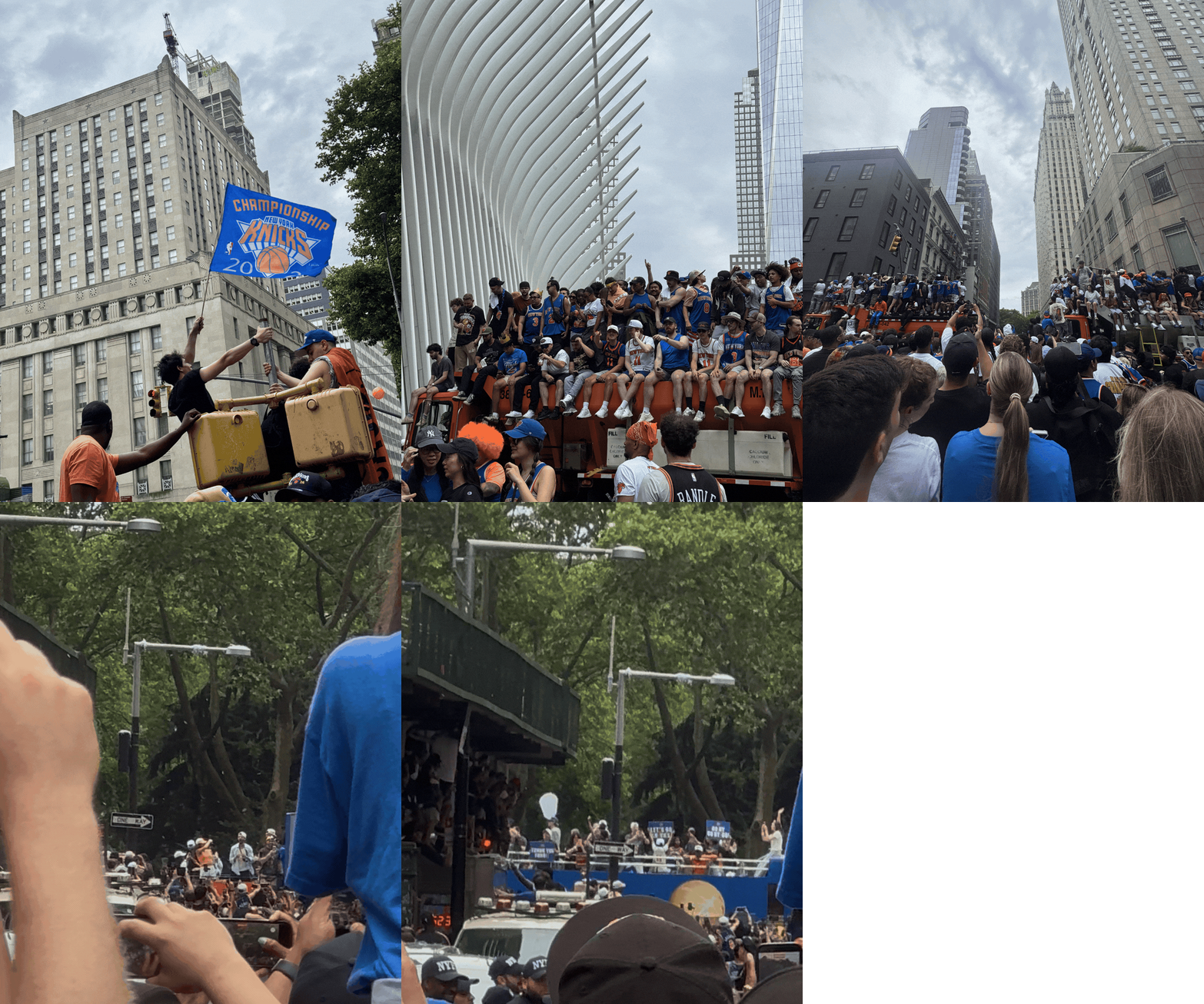
The parade passed right outside our office at 25 Broadway, and we were on the street for it. Millions packed into Lower Manhattan, lifelong supporters and first-time believers side by side.
The event came together in days, an impressive feat at this scale. But it exposed the challenge of planning for success. With crowds filling every block, movement broke down. At several points pedestrian flow hit a complete standstill, with spectators nowhere to disperse. Could additional viewing zones, more access points, or a longer route have spread the crowds? No easy answers in one of the densest cities on earth. But the lesson holds: when a city celebrates together, crowd management matters as much as the celebration.
The celebration didn't stay in one place. Fan zones materialized citywide, projectors thrown onto handball courts and building walls, LinkNYC kiosks streaming the game live, 34th Street alive well past midnight. The run generated an estimated $202 million in economic lift, a number that says something about what a team can do when it gives people a reason to gather.
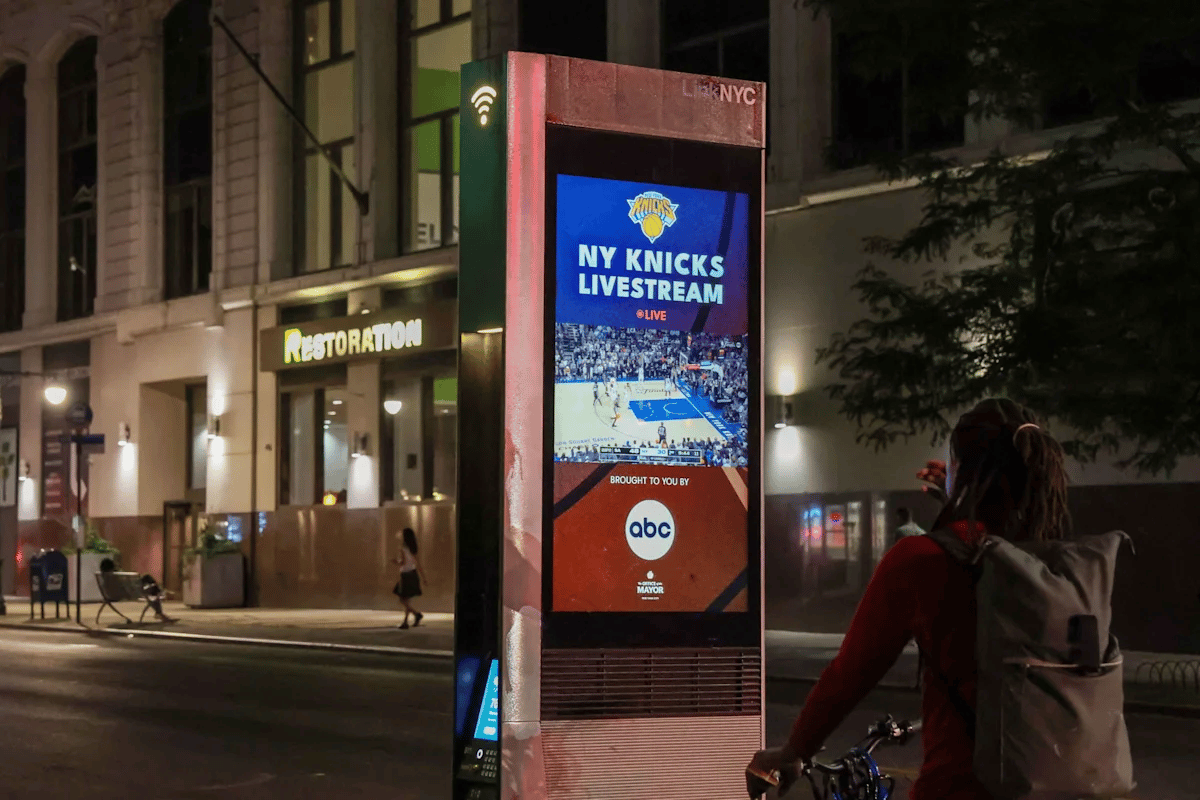
Here's the bigger opportunity. For the largest sports brands, more than 90% of fans will never attend a game. So how do we design the fan experience when it has nothing to do with a ticket or a seat? Pop-up venues, city-wide activations, and moments that deepen engagement and merchandising. These journeys, the ones that never touch a turnstile, are exactly what teams struggle to map, especially on high-stakes, high-stress days. That's where quick-turn workshop and visioning tools help teams pressure-test scenarios with their civic partners before the crowd arrives.
Key takeaway: The fans who never buy a ticket are the biggest untapped audience in sports, and the journeys that reach them are the hardest to plan and the most valuable to get right.
NASCAR | America
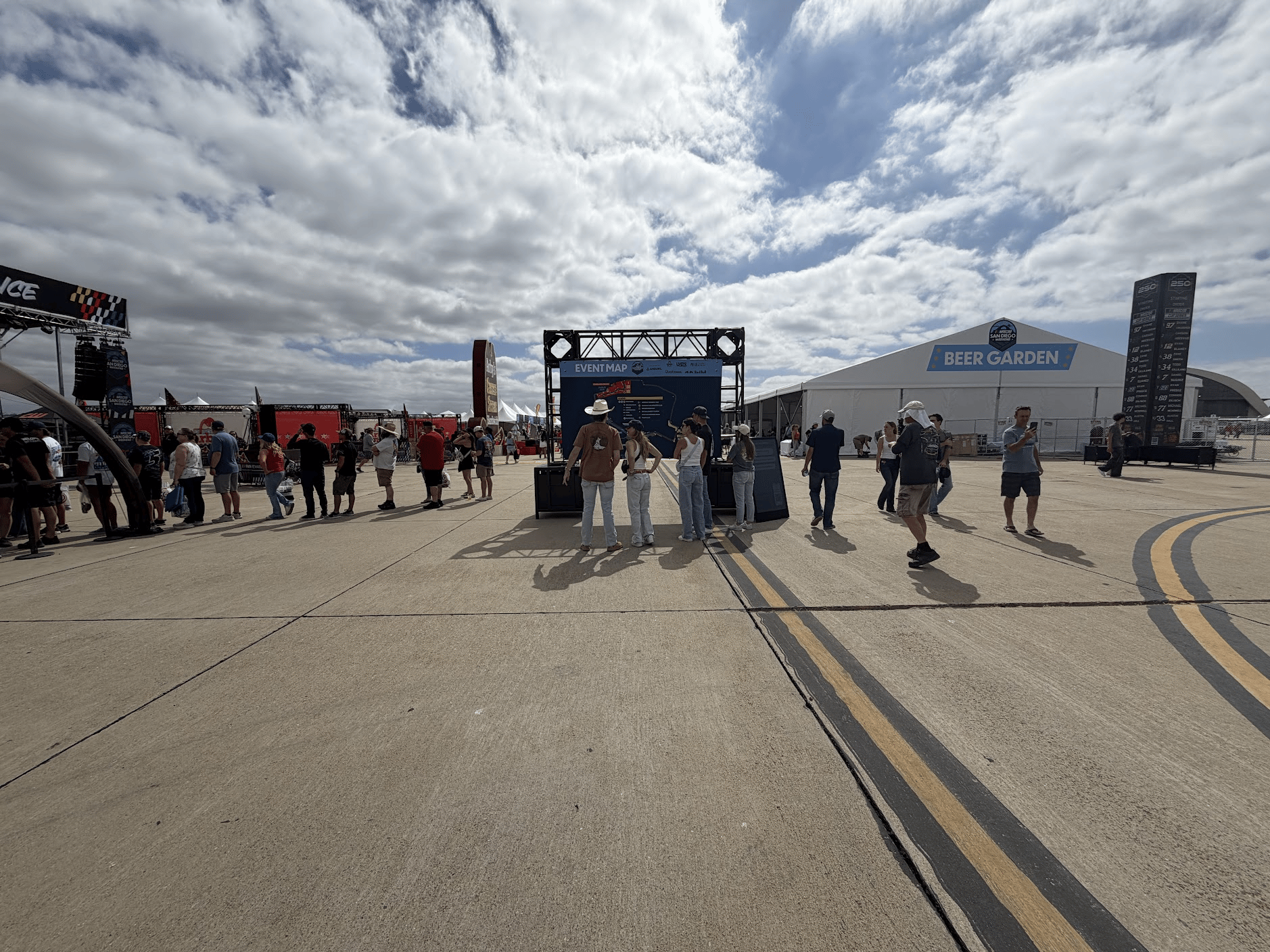
We wrapped a great week at Coronado Naval Base in San Diego with NASCAR, and it was an honor to be part of the Navy's 250th birthday. Most of our work in the built environment takes years to come together. This was the opposite. An entire race track and three-day festival stood up in weeks on an active military base, a level of speed and coordination you rarely see.
The venue brought every challenge worth solving. A base most fans had never set foot on. A course so large that getting from one point to the next was its own puzzle. And a crowd of first-time fans learning in real time how to pace a full motorsports weekend, from when to arrive to where to be to how to find their way back. It gave us a chance to run our pilots live with great partners and build strategy we carry forward to every venue.
Here's why the project excites us. Clients usually get locked into big technical investments they spend years unwinding. With NASCAR we flipped the script, giving the industry a chance to live-pilot their hardware in the field. Two wins: smaller companies get their products in front of real crowds, and clients get to try before they buy. More on this soon.
Key takeaway: Live-piloting hardware at a real event beats locking clients into big technical bets they can't unwind, and it opens the door for smaller vendors to compete.
World Cup | North America
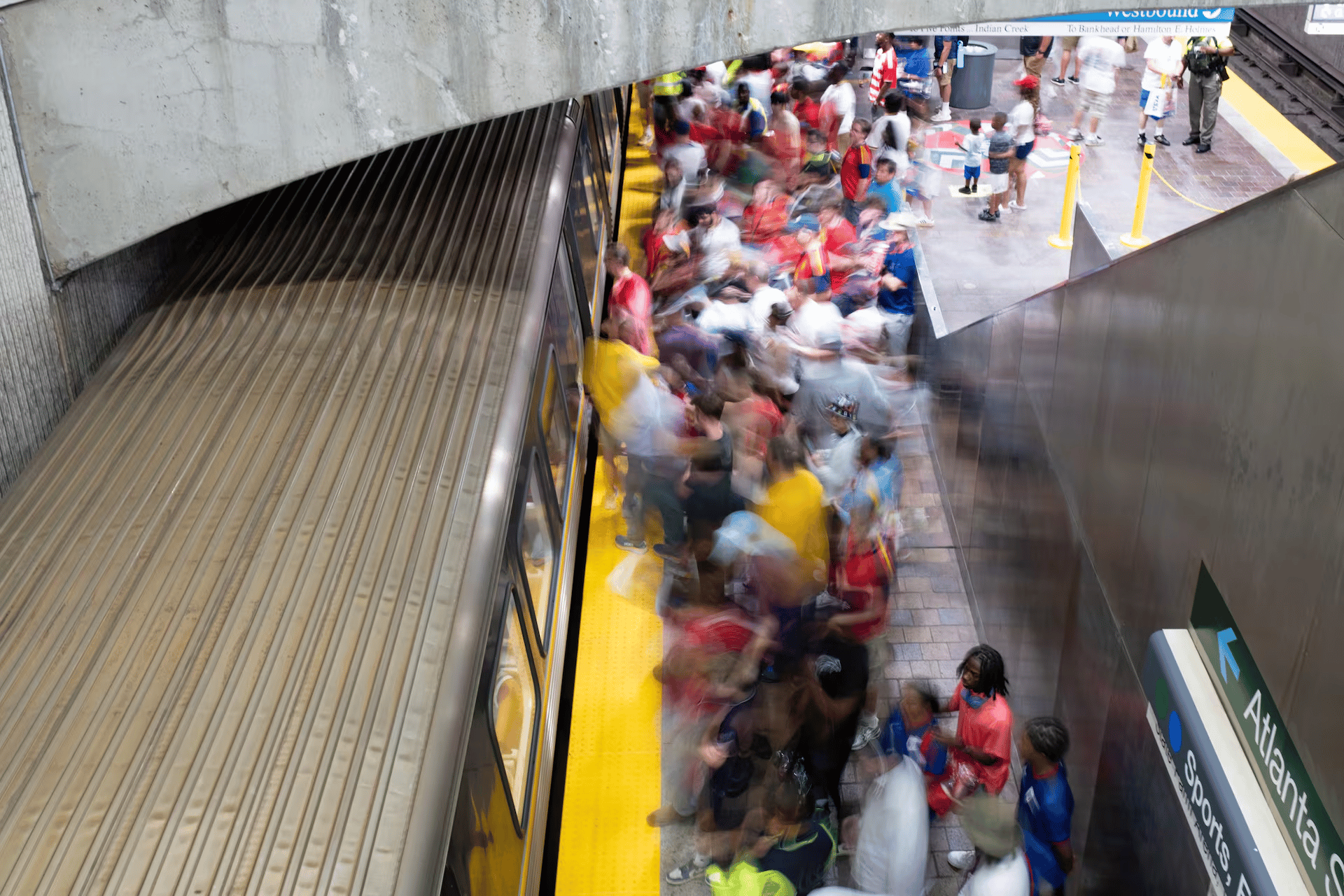
The World Cup is in full swing. FIFA unified 16 host cities under one tournament identity and introduced thousands of international fans to a range of American cultures, even as the US team fell to Belgium. Gameday experiences have varied dramatically city to city. A look at the early winners and losers.
Winner: Atlanta. Urban stadiums have the edge over suburban ones, and Mercedes-Benz Stadium has been the full package. Modern, direct rail access, pedestrian overflow to nearby parks, and an army of DOT traffic engineers adjusting signals in real time on gameday. Add the cheapest concessions and some of the tournament's best matches.
Loser: Kansas City. A disastrous first outing, with traffic backups causing hundreds of fans to miss part or all of the match. The failure broadcasts American car dependency and validates the centrally located, transit-connected sports-entertainment-culture hub model.
Offside: New Jersey. In response to sky-high ticket prices, FIFA asked cities for free fan zones to livestream games. New Jersey's official zone was cancelled in February for missing FIFA's 15,000-attendee minimum, in favor of a network of smaller ones. That hasn't stopped true fans from watching in yards, parks, and streets with anyone who shares the passion.
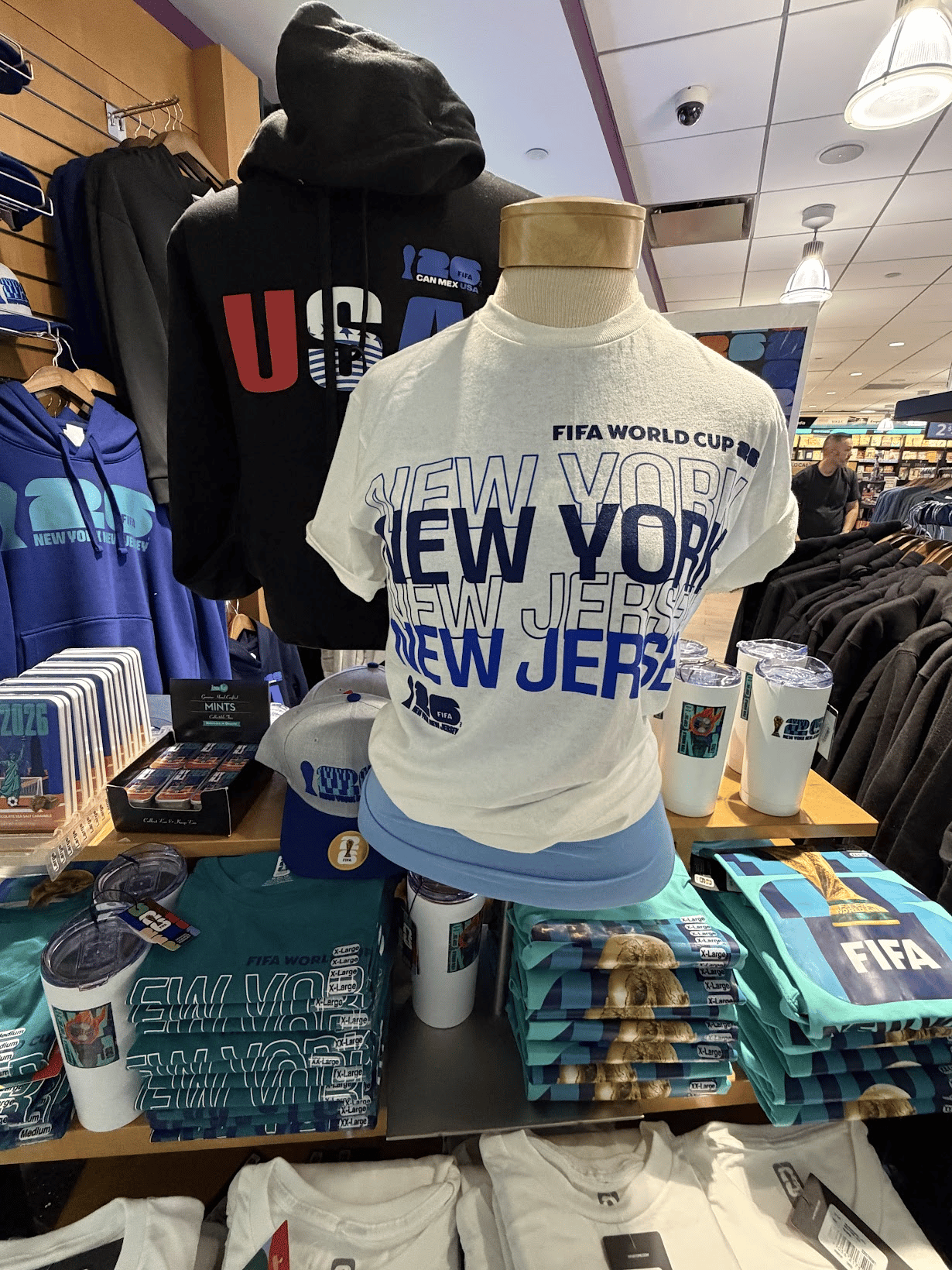
Will anyone actually buy the mashup NY/NJ shirt? Credit: Paul McConnell
The design challenge running through all of it: helping stakeholders visualize and rehearse the handoffs between them before gameday, not during it.
Key takeaway: Transit access separated the World Cup's winners from its losers, and the cities that rehearsed stakeholder handoffs in advance are the ones that held up.
Signals
SPORTS & TRANSIT · THE HAMPTONS
Moving the masses to spaces designed for exclusivity
We spend more time in stadiums than at posh events out east but wanted to mention that the US Open came to Long Island, turning the private Shinnecock Hills into golf's biggest stage for a weekend. Moving 30,000 daily visitors to the far end of an island built on privacy is no small feat. Capped attendance, boosted wi-fi, detailed maps, and an event-specific app tried to cover every base, but comprehensive isn't the same as simple. Golfers noticed the crowds thinning as fans scrambled for the last LIRR train of the night.
The fix is knowing before you go: pre-visualization and planning workshops, plus third-party research to test how well "know before you go" messaging actually lands, even reaching fans through printed and mailed materials to get them there prepared. [Read more here]
Key takeaway: Comprehensive information isn't simple information. Fans need clear, tested guidance before they leave home, not an app to decode on arrival.
SPORTS · BUFFALO, NY
Reinvesting in their strengths
The Buffalo Bills cut the ribbon on their new $2.1 billion open-air stadium, built to embrace New York winters in a league trending toward domes. New Highmark Stadium includes an onsite broadcast and technology complex with a data center more than capable of handling gameday. It's the fourth new NFL stadium in a decade, with six more expected soon. [Read more here]
Key takeaway: When a stadium becomes a data center, it can serve the wider community, supplying computers to local schools and businesses on non-game days and freeing up venue space for revenue-generating uses instead of back-of-house hardware.
SPORTS & CULTURE · NEW YORK CITY
Sports as artifact, artifact as institution
The American Museum of Natural History now hosts For the Win: Objects of Sports Excellence, placing championship trophies, rings, and medals alongside its dinosaur fossils and gemstones. The show spans 70-plus objects across 15 sports and nearly 150 years, including the Vince Lombardi Trophy, a Jesse Owens 1936 Olympic gold medal, and Breanna Stewart's 2024 WNBA Championship ring. [Read more here.]
Key takeaway: A natural history museum treating athletic achievement as material culture signals that sports has become heritage worth the same curatorial rigor as minerals and meteorites.
Where We Were
SEAT Conference 2026, Charlotte
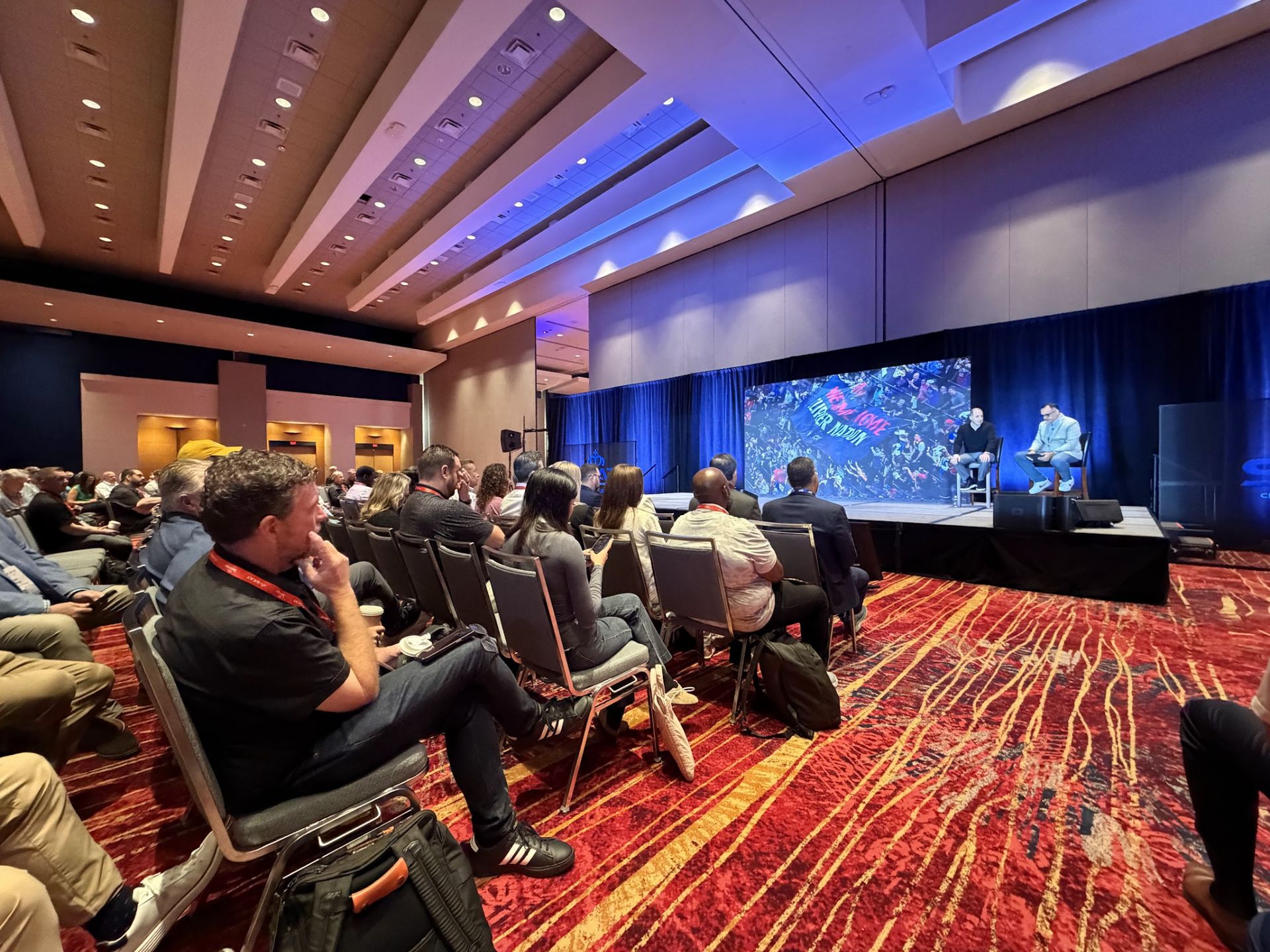
Our team returned to the SEAT Conference in Charlotte, our third year at the leading gathering point for sports teams and professionals across all leagues. We joined a panel to share fan score findings from our NASCAR work, and spent time connecting with other teams and sitting in on sessions. The programming centered on fan experience, security, and data, with much of this year focused on how teams are using AI to manage and run their operations. We’ll share more on our findings and takeaways from this event soon.
Events To Watch
EXPERIENCE DESIGN · NEW YORK
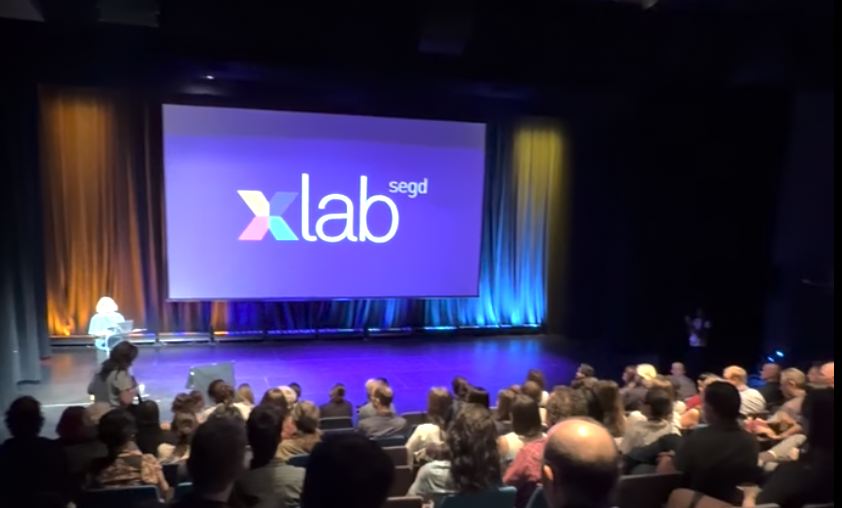
2026 SEGD Xlab
July 22-23, 2026
A two-day symposium on experiential design gathering designers, technologists, and storytellers at BRIC Brooklyn; exploring what it means to make meaningful work as AI accelerates and attention fragments. Worth watching for where experience design practice is heading next. [SEGD Xlab]
On Our Calendar
The Place Bureau x NOBLE
We've been running a series with The Place Bureau on sport, cities, and the spaces in between. Part 1 looked at how venues shape urban ecosystems. Part 2 goes neighborhood scale: women's sport as civic infrastructure, what it means to design for permanence, and why the most interesting question isn't who's in the stands but how the stadium enters the street. Coming soon.
Thanks for reading. If this sparked ideas, questions, or critiques, we’d love to hear from you. Noble is committed to partnering at a system level – if your culture or civic organization is tackling similar challenges, we’d love to chat. From innovation sprints to full-scale implementations, we help translate big ideas into practical solutions.
Until next time,
The Noble Team