



.png)

25 Broadway 10th Floor
New York, NY 10004
IN BRIEF
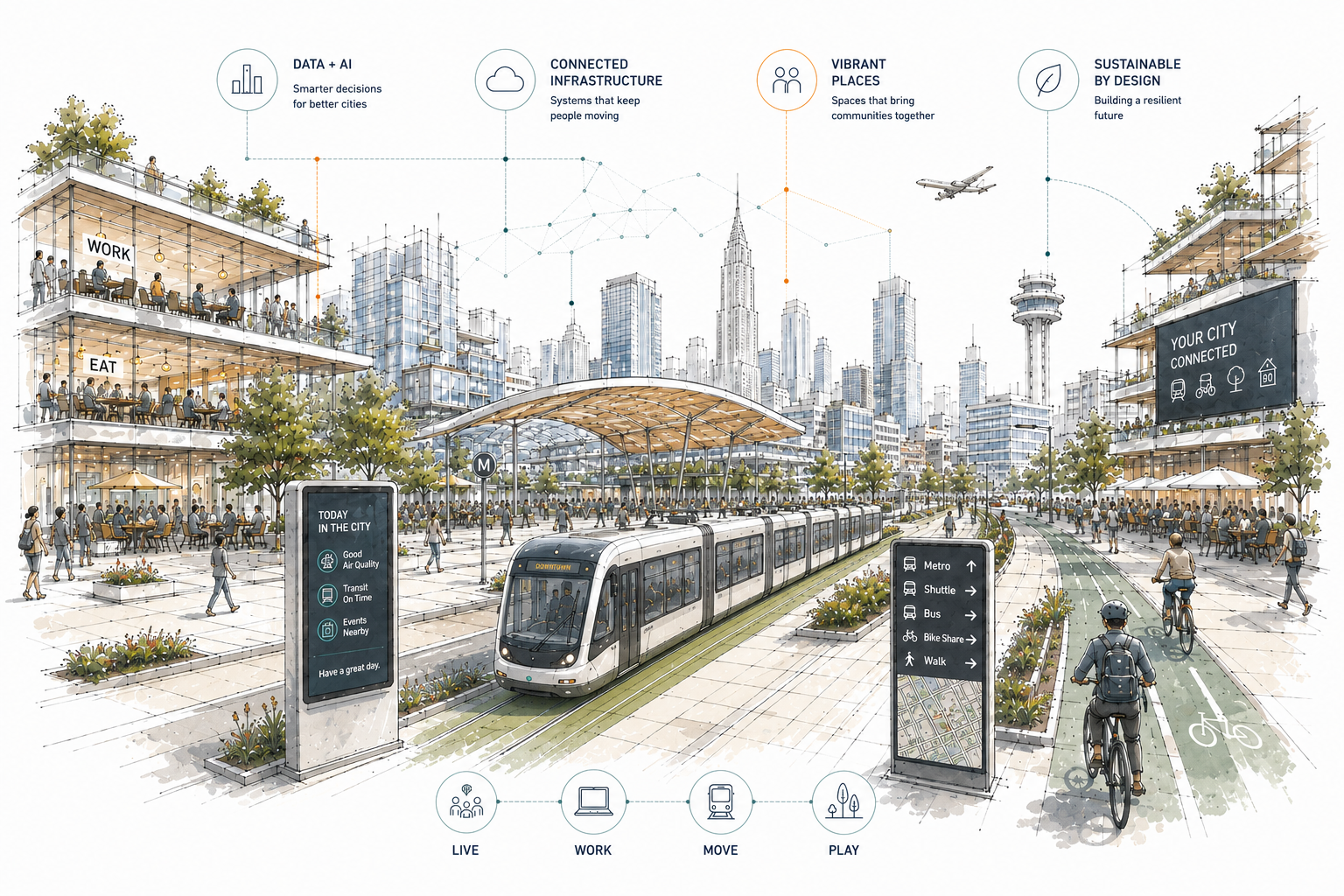
- Cities are being redesigned across four layers at once — live, work, move, and play — and the projects worth watching right now are the ones treating all four as a single design problem.
- AI and autonomous systems are already running in civic infrastructure. The bottleneck isn’t technology, it’s governance: procurement, data integrity, and the institutional capacity to operate at scale.
- From airport AI to Penn Station’s overhaul, a handful of headlines this month show what civic-level redesign looks like in practice.
THE LEAD
Our studio is based in New York, and the city is having a moment. The Knicks are in the NBA Finals and the energy is reaching a fever pitch. We are ramping up for the FIFA World Cup, June is Pride Month, and the tourist scene is surging. Long live the city.
Noble was born out of the digital city and digital building movement, starting with projects in physical spaces almost twenty years ago. The terms kept changing, Smart City, Internet of Things, and around 2020 the momentum cooled as COVID hit and investment dried up alongside the drops in real estate and commercial markets. But the same thinking is re-emerging now, the idea that buildings should not be built without the end user and how they will actually use the services layered into them.
So what is the role of the designer? Is it to protect the user, to design on their behalf? If so, we need to be in the room, fluent in AI systems and data and how all of it is being used. There is a real case for the designer as the people's advocate, and a real need for unbiased third parties who can make that call without a stake in the outcome. Especially now, when some of the largest investments in digital buildings are no longer about people at all.
Data centers Hyperscale facilities organized entirely around airflow, power density, and cooling. No daylight, no human circulation, because none is needed. The sustainability cost is something we are only beginning to reckon with.
Dark warehouses Robotics fulfillment centers laid out for the path efficiency of machines. Aisles sized to robots, lighting kept minimal, people the exception pushed to the edges.
The curb We went from civic bike fleets to bracing as we cross a bike lane, wary of high-speed autonomous craft. The first pilots are arriving, and nobody has decided who speaks for the people who live here.
FIELD INTEL
Themes from the 2026 Smart City Expo
.jpg)
Tomorrow.City USA brought 2,000 public, private, and philanthropic leaders to West Palm Beach on April 14–15 — the U.S. flagship of Smart City Expo World Congress (SCEWC), organized by Fira Barcelona. (tomorrowcity.us)
Two days, multiple stages, one persistent question threading through all of it: are American cities actually ready for what's coming? The honest answer: not yet — but moving.
AI as civic infrastructure, not experiment. The dominant conversation wasn't whether to adopt AI — it was how to stop piloting it and start operating it. Sessions on digital twins, physical AI (sensors + edge computing + real-world urban systems), and responsible public sector deployment kept returning to the same bottleneck: governance. Data integrity, procurement, internal capacity to scale. The tech is available. The institutions are still catching up.
Mobility as access. LA Metro CEO Stephanie Wiggins laid out what it took to build one of the country's largest transit systems — long-horizon planning, voter-approved funding, political complexity. Sessions on autonomous vehicles, fleet electrification, and multimodal planning made a consistent argument: first-mile/last-mile connectivity is an equity problem before it's a technology problem. Cities that solve it don't just move people more efficiently — they change who gets to participate in the city at all.
Adaptive reuse as economic policy. The "Greyfields to Growth" session reframed vacant malls, corridors, and legacy buildings not as design opportunities but as fiscal ones. Cities serious about downtown recovery are treating adaptive reuse as infrastructure investment, not just real estate strategy.
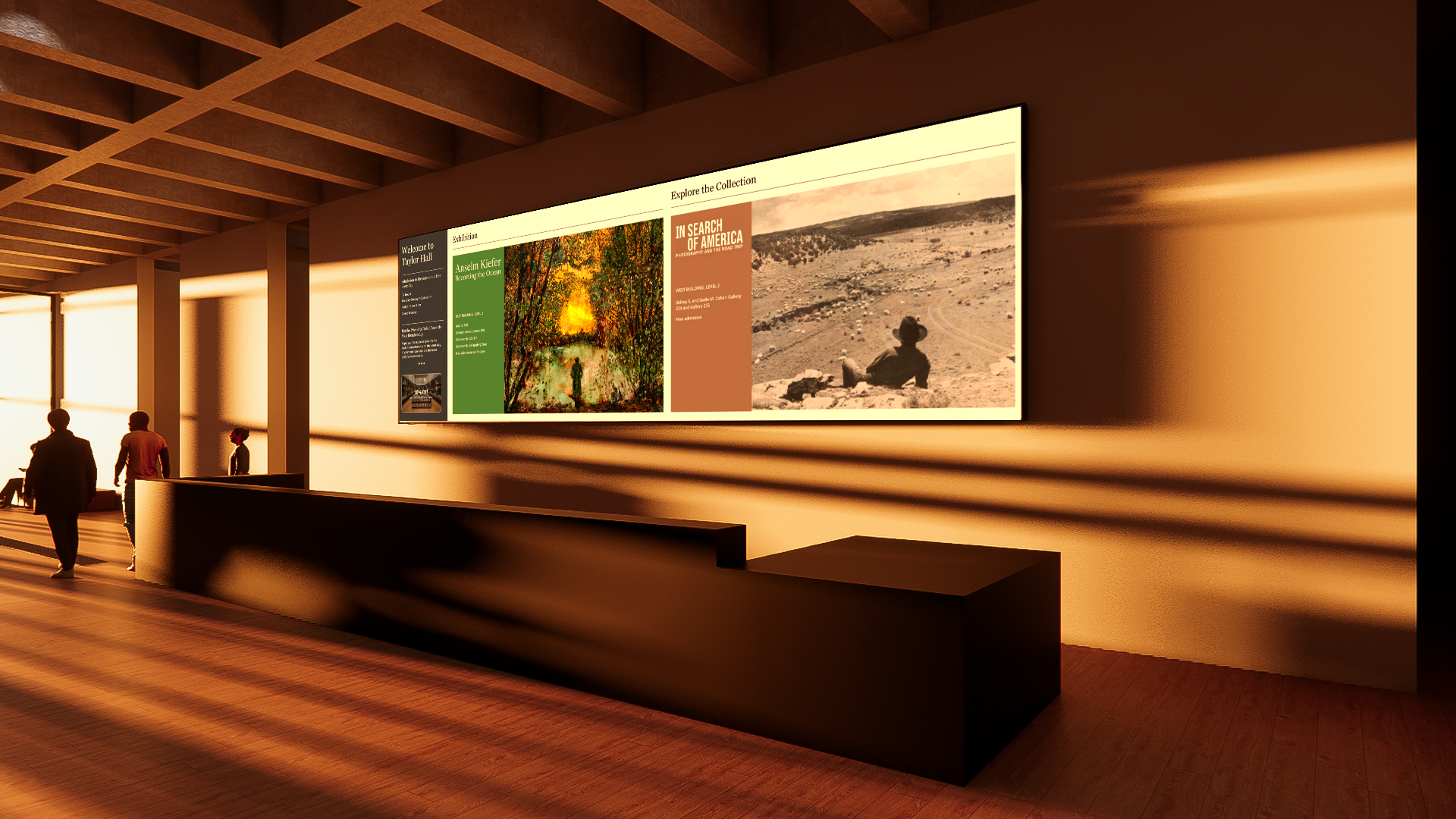
For Noble's radar: Pixels with Purpose: Monetizing Urban Screens without Losing the Mission with our pals Charlie Miller and Scott Goldsmith — a session on how cities and transit agencies structure digital screen networks to generate revenue and deliver civic value at the same time.
SIGNALS
TRANSIT · MIAMI
AI wayfinding lands at the airport
Miami International Airport just launched the MIA Virtual Assistant — the first airport to deploy large-scale, geo-aware agentic AI across its full digital infrastructure. The same assistant, same accurate location-aware answer, across web, WhatsApp, phone, and four holographic terminals in the terminal. Built on Mappedin's indoor mapping platform, Satisfi Labs' conversational AI, and HYPERVSN's holographic tech — all running within MIA's own Azure environment so the airport keeps full data governance. MIA serves 55 million passengers a year and is mid-way through a $9 billion capital improvement program. This isn't a chatbot upgrade. It's a new layer of civic infrastructure. (Mappedin, May 2026)
TRANSIT · NEW YORK CITY
Penn district is getting rebuilt, again
Influenced by a vision from PAU architects, Amtrak and the Federal Government just approved a full Penn Station overhaul, selecting Penn Transformation Partners (Halmar and Skanska) as the master developer. The plan: a grand new entrance on Eighth Avenue, a new train hall, new concourses replacing the current cramped walkways, increased track capacity including limited through-running on regional rail, and full passenger experience upgrades. Madison Square Garden stays put but gets a new glass entrance and renovated exterior. Groundbreaking is expected before the end of 2027. For the busiest rail hub in the Western Hemisphere — one that's been a civic embarrassment for decades — this is overdue. The design challenge ahead: how do you build a world-class transit experience in one of the world's most complex underground environments, without shutting down multiple transit and commercial real estate operations? (Time Out New York, May 2026)
WHERE WE WERE
EXPERIENCE DESIGN · NEW YORK CITY
Big Experiential: where physical and digital meet
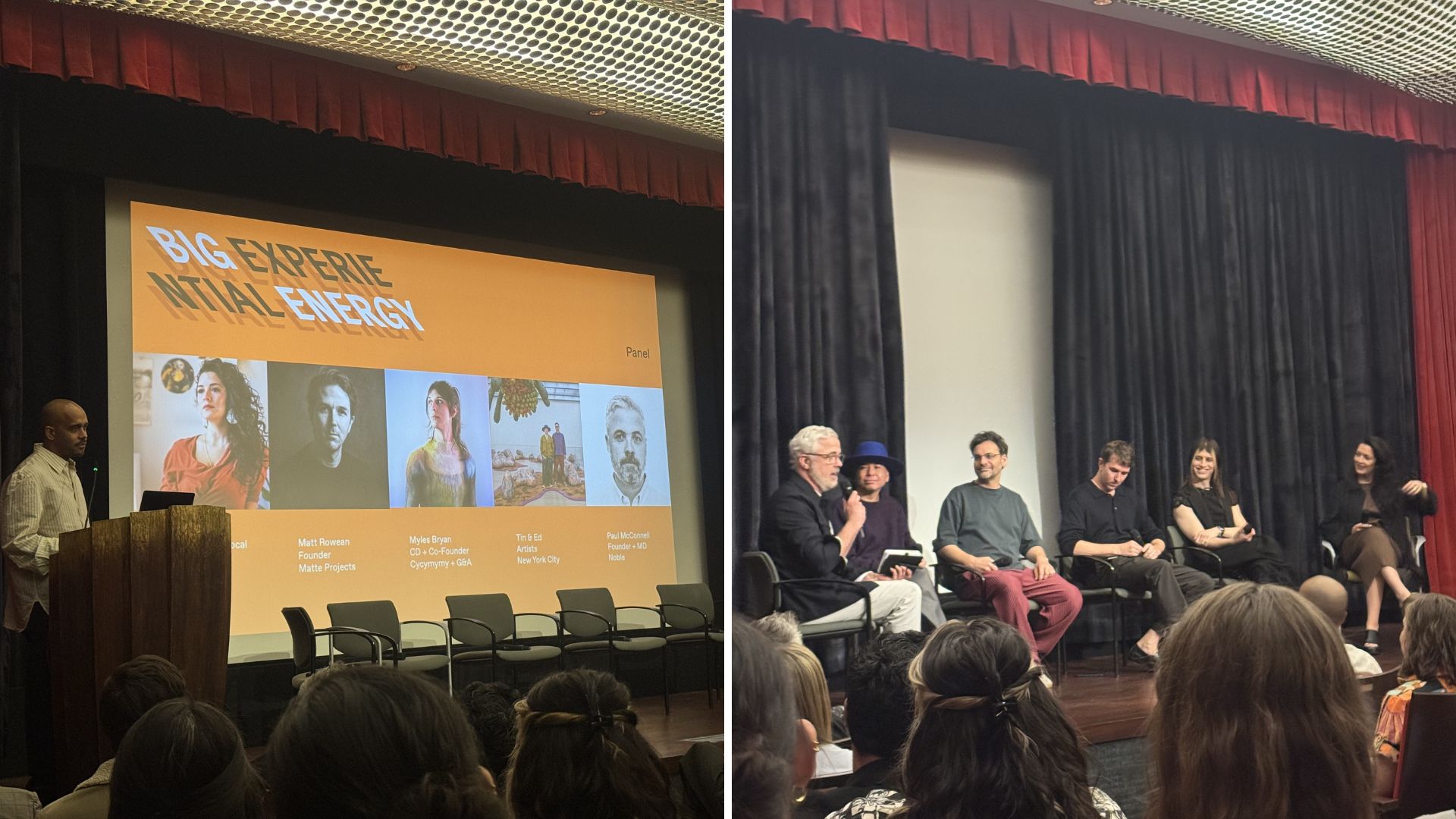
We were at the AIGA NY panel at the Museum of Arts and Design, where our own Paul McConnell moderated a conversation with Matt Rowean of MATTE Projects, Tin & Ed, Cat Garcia-Menocal of Pink Sparrow, and Myles Bryan of G&A / Cycymymy. Digital and physical experience colliding across museums, music, hospitality, and media-driven storytelling. The conversations that stayed with us: Cat Garcia-Menocal on arriving at strategy through experiential design, using memory as a material. Matt Mock on the story a space will be remembered for, not what it does, but what it means. The underlying question threading all of it: who is your audience, and what behavior and emotion do you actually want to evoke? When the answer is genuinely known, the design follows. When it isn't, the space fills up with good-looking answers to the wrong question.
CULTURE · PHILADELPHIA
Museums as timekeepers — and what that means for experience design

The American Alliance of Museums convened May 20–23 under the theme The Museum Odyssey — framing museums as timekeepers, travelers, chroniclers, and seers. The backdrop: the U.S. 250th anniversary, and Philadelphia as the deliberate setting — birthplace of American democracy, home to the nation's first library, zoo, and combined art school and museum. The through-line across sessions was time as a design material: how institutions mark it, interpret it, and help communities make meaning across it. For Noble, the overlap is direct — the question of what a space is trying to make someone feel, and how that intent holds up over years of use, not just opening weekend. (annualmeeting.aam-us.org)
EVENTS TO WATCH
TECH · NEW YORK
NYC Tech Week June 1-7, 2026
The city's largest gathering of founders, operators, and investors. A reliable signal of where serious capital and attention in urban tech is actually flowing. We'll be around. [Tech Week]
A/V TECH · NEW YORK
InfoComm June 17-19, 2026
The pro AV industry's flagship show, bringing together 30,000+ manufacturers, integrators, and end users to see where audio, video, display, and integrated experience technology is heading. For anyone working at the intersection of physical space and digital systems, it's a reliable read on what's about to land in the environments we design. [InfoComm]
CULTURE · ONLINE
VIRTUAL Museums and Public Programming June 24-26, 2026
A virtual gathering of museum professionals and cultural innovators focused on how institutions design and deliver public programs that actually reach people. The question threading through it: how do you build programming that's mission-driven and still resonates beyond opening weekend? [Museum Next]
SPORTS · CHARLOTTE
SEAT Conference June 28-30, 2026
Sports and entertainment converging with venue technology. Venues are among the most compressed civic environments there are — high density, high expectation, fast turnover, massive data surfaces. What gets built and tested inside them tends to preview what cities adopt next. [SEAT Conference]
If your organization is being asked to think across all of these layers at once, the strategic design of the physical environment, the implementation of technology to support it, and the operational reality of spaces that need to adapt faster than they were built to, we would like to talk. Learn more at Noble.io
FREQUENTLY ASKED QUESTIONS
What is civic-level development?
The idea that cities function as a system across four layers — live, work, move, and play — and that the most effective urban projects design across all four rather than optimizing one at a time. When those layers are treated in isolation, you get places that work financially but don’t function as neighborhoods.
What was the big takeaway from Tomorrow.City USA?
That American cities are moving toward AI-powered civic infrastructure, but governance is the real constraint. Data integrity, procurement rules, and internal capacity to scale — not the technology itself — are what’s slowing deployment down.
What is Smart Building Technology?
Smart building technology is the network of sensors, data systems, and connected infrastructure that lets a building—or a city—sense, respond, and optimize in real time. At city scale it spans live, work, move, and play as a single design problem.
Learn more about Dashboards & Digital Twins.