



.png)
25 Broadway 10th Floor
New York, NY 10004
In brief
- The conference was grounded in the 2018 Davos Declaration, focusing on quality in the built environment beyond compliance and technical metrics.
- Technology is framed not as the answer but as a tool for asking better questions about lived experience, cultural context, and long-term impact.
- Quality emerges through use; prototyping, civic engagement, and post-occupancy evaluation are signs of care, not uncertainty.
- True Baukultur cannot separate quality from access, inclusion, and stewardship—measuring the wrong things can erase culture.
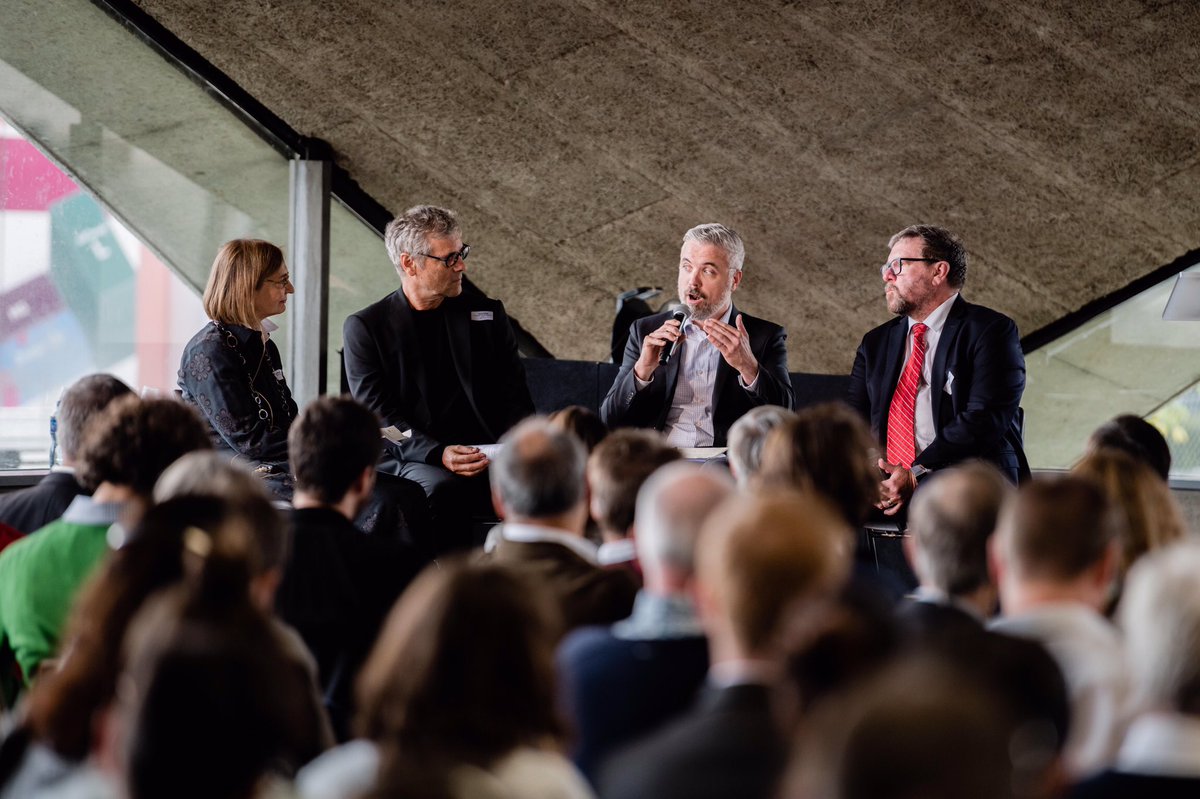
Last week in Geneva, I had the opportunity to speak at Getting the Measure of Baukultur, a conference grounded in the 2018 Davos Declaration and its call for a higher quality built environment that meaningfully improves human wellbeing.
The setting itself framed the conversation. Pavillon Sicli is a powerful example of adaptive reuse. Industrial, civic, and quietly generous, it is the kind of place that makes Baukultur tangible. You feel it immediately. Baukultur is not an abstract policy goal. It lives in the way a space welcomes people, supports interaction, and carries history forward.
The conference brought together architects, planners, sociologists, policymakers, and technologists to grapple with a deceptively simple question. What do we actually mean by quality in the built environment, and how do we know when we have achieved it?
From building things right to building the right thing
I spoke from the perspective of someone working at the intersection of engineering, digital technology, and experience design. Much of my career has been spent inside large organizations that are highly skilled at delivering complex projects on time and on budget.
But the more challenging question today is no longer how to build. It is what we choose to build in the first place.
Quality is often reduced to compliance. Performance metrics, technical standards, efficiency targets, and certification systems all play a role. But they are not enough. High quality Baukultur requires a broader and more human lens. It asks us to understand lived experience, cultural context, and long term impact, not just technical success.
Measuring what actually matters
One of the central tensions throughout the conference was measurement. Can quality be quantified without losing its meaning?
My position is not skeptical of data. In fact, we now have access to extraordinary tools. Sensors, mobility data, environmental monitoring, digital twins, and real time feedback systems give us insight into how places actually perform.
The challenge is not a lack of information. The challenge is interpretation and access.
Today, the most advanced analytical tools are typically used by large institutions and corporations to gain efficiency or economic advantage. But imagine if cities and communities had access to similar tools, designed to support collective learning rather than extraction.
Imagine if small businesses, neighborhoods, and civic groups could understand how spaces work over time and adapt them based on real evidence. This is where Baukultur and digital practice intersect. Not technology as the answer, but technology as a way of asking better questions.
Prototyping, stories, and post launch learning
Another theme I returned to was the importance of learning in public. Quality is not something that can be fully defined at the start of a project. It emerges through use.
Prototyping, civic engagement, and post occupancy evaluation are not signs of uncertainty. They are signs of care. Some insights are best communicated through data and open systems. Others land more clearly through stories, visualizations, and narratives that help people understand how a place fits into their lives.
The most resilient projects I have seen treat buildings and public spaces as evolving systems rather than finished objects. They make room for adjustment and humility after launch.
Culture, memory, and access
I closed with a personal reflection. I grew up in Brooklyn in a period when the city looked bleak by many economic measures. But socially and culturally, it was vibrant. People spent time together. Communities were dense with relationships. Creativity flourished.
Today, many of those same neighborhoods are considered successful by conventional metrics, yet they are increasingly inaccessible to the people who shaped them. That contradiction sits at the heart of Baukultur.
Quality cannot be separated from access, inclusion, and stewardship over time. If our measures of success erase culture, then we are measuring the wrong things.
Leaving Geneva
What stayed with me most from Geneva was not a single framework or metric, but a shared understanding that quality is ultimately a choice. It is cultural before it is technical.
The conversations at Pavillon Sicli reinforced why this work matters. The future of Baukultur depends not only on better buildings, but on better ways of listening, learning, and evolving alongside the people who inhabit them.
Frequently asked questions
What is Baukultur?
Baukultur refers to the quality of the built environment, encompassing not just technical performance but also cultural context, human experience, and long-term stewardship. It was central to the 2018 Davos Declaration and the conference discussed in the article.
How can technology help measure quality in buildings and public spaces?
Sensors, mobility data, digital twins, and real-time feedback systems provide insight into how places perform. The challenge is interpretation and access—making these tools available to communities, not just large institutions, to support collective learning.
Why is post-occupancy evaluation important for Baukultur?
Quality is not fully definable at a project's start; it emerges through use. Post-occupancy evaluation, along with prototyping and civic engagement, allows spaces to adapt over time and reflects a commitment to care and learning in public.
What is the tension between measurement and meaning in the built environment?
The article notes that while data and metrics are valuable, reducing quality solely to compliance or efficiency misses human and cultural dimensions. The goal is to use data to ask better questions, not to replace lived experience.
How does the article connect Brooklyn's past to Baukultur?
The author reflects on growing up in Brooklyn when it was economically bleak but socially vibrant. Today, those neighborhoods are 'successful' by conventional metrics yet inaccessible to the people who shaped them, illustrating that quality must include access and inclusion.
Related reading
- 5 Digital Considerations for Cultural Institutions
- What’s Next with Noble: Cultural Spaces & Digital Engagement
- Living Landmarks: This Week in Cultural Experience
What is Spatial Design?
Spatial design is the discipline of shaping how people move through and experience physical space—integrating architecture, environments, and digital layers. Strong spatial design treats quality as something that emerges through use, not just compliance.
Learn more about Experience Strategy & Vision.