



.png)
25 Broadway 10th Floor
New York, NY 10004
In brief
- Sport is emerging as a dominant engine for new social connection, filling the void left by traditional third spaces like schools and places of worship.
- Inclusive design requires removing invisible thresholds—such as sightlines and assumed prior experience—that signal to certain people a space wasn't made for them.
- Activated public space is safer public space; reclaiming forgotten areas like the Brooklyn Banks can stitch communities together while serving multiple user groups.
- Personal movement data, when aggregated, becomes civic infrastructure that can inform urban planning decisions, though it risks excluding informal activities like pickup basketball.
Part 1 — The Personal Scale: Sport as Social Glue
A collaboration between The Place Bureau and Noble.
We are living through a significant reorganisation of social life. Families move more than they used to, typically for work, or affordability. The anchors that once held communities together, such as schools, places of worship, the union hall, and social associations have, for many people, faded or disappeared entirely. The traditional third spaces that structured daily belonging are no longer available.
In that gap, sports have filled a void.
It’s now more common than ever to have the morning run group, the HYROX circuit, or the pickleball ladder league. Across cities, we are watching sports grow as the dominant engine of new social connection. Endurance events, and group training and wellness formats are growing, and they are filling both physical and relational spaces.
These communities work because they're designed, consciously or not, around the same principles that once made the social club function: regularity, low barriers to entry, and a group identity formed through participation.
Sport gives you somewhere to belong and a reason to show up.
What makes someone feel like a place was made for them? What keeps them coming back? What makes them bring someone else? At The Place Bureau and Noble, our work explores these questions as we search for opportunity for improvements.
These are empathy questions before they are insights and design solutions. Below are four cases where sport, space, and community intersect, each one illuminating something we've learned about how to design for belonging at the personal scale.
1. Designing for Confidence
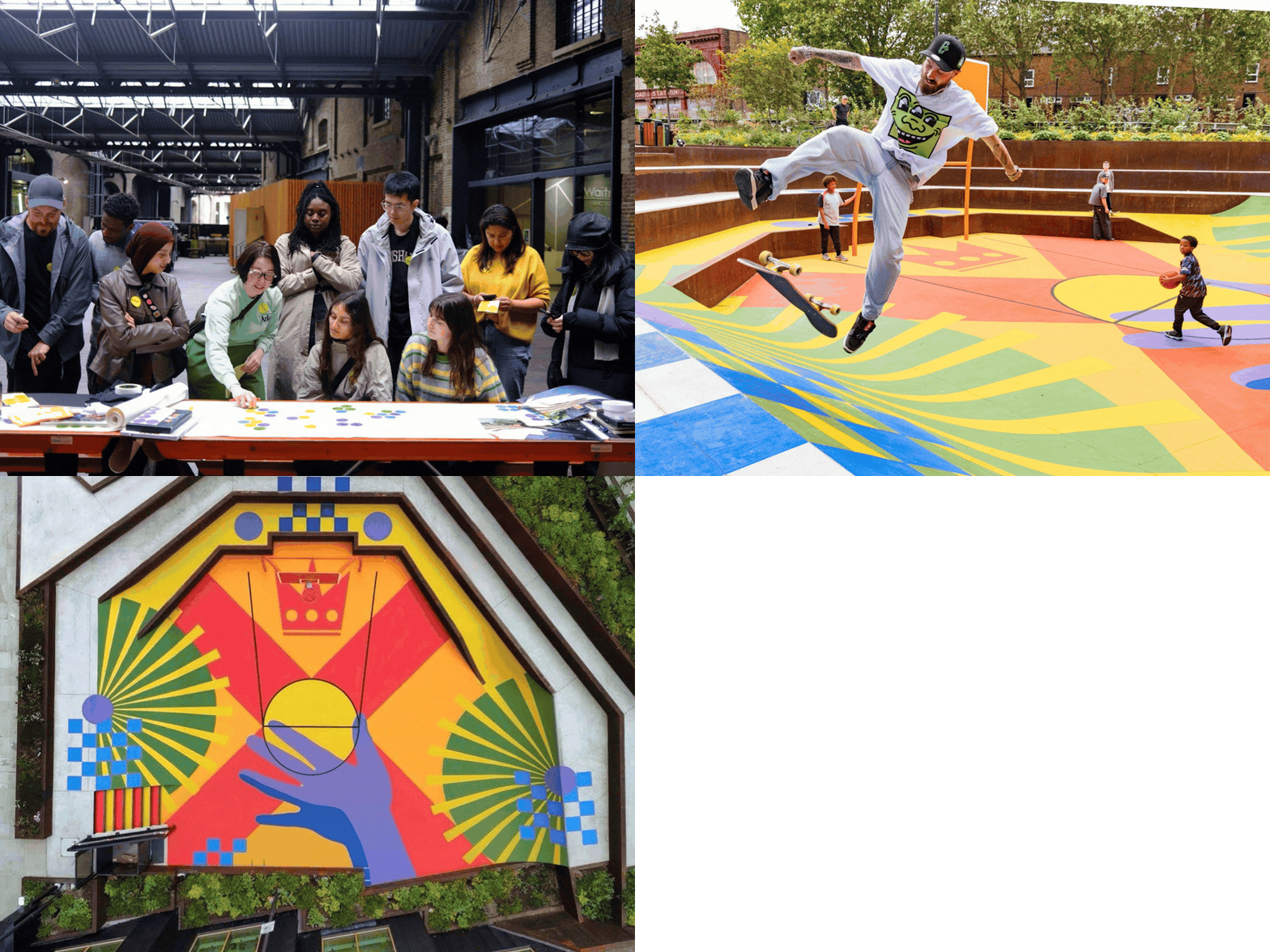
The Place Bureau co-designed Gatti Park, a new sports facility in London's King's Cross, in partnership with Central Saint Martins and Creative Arts Organisation Wood Street Walls for landowner Related Argent. The original brief was focused on creating a space that would welcome women and girls. As practitioners who play sport ourselves, we knew we had to push past this framing. The right question wasn't 'how do we design for a demographic?' It was: what actually prevents people from feeling confident enough to use public space in the first place?
What our creative workshops revealed went beyond a list of gender-specific amenities. We noticed the invisible thresholds that signal to certain people that this space was made for someone else. The absence of seating that lets you pause before committing. Sightlines that put you on display before you're ready. Programmes and dynamic signage that assume prior experience.
Remove those barriers, and you don't only design a women's space; You design a better space — a space that gives everyone the confidence to show up and play.
WHAT IF… Public space didn't demand confidence, but built it?
HOW WE THINK
Inclusive design isn't a demographic brief, it's an interrogation of invisible thresholds. We start by asking who feels permission to enter, and what the space is communicating before anyone steps inside.
WHAT YOU CAN APPLY
Audit your next project for its 'entry experience', the moment before someone commits to participating. What signals does the space send? Who is implicitly centred? Removing a barrier is often more powerful than adding a feature.
2. Reclaiming Forgotten Space and Making it Safer
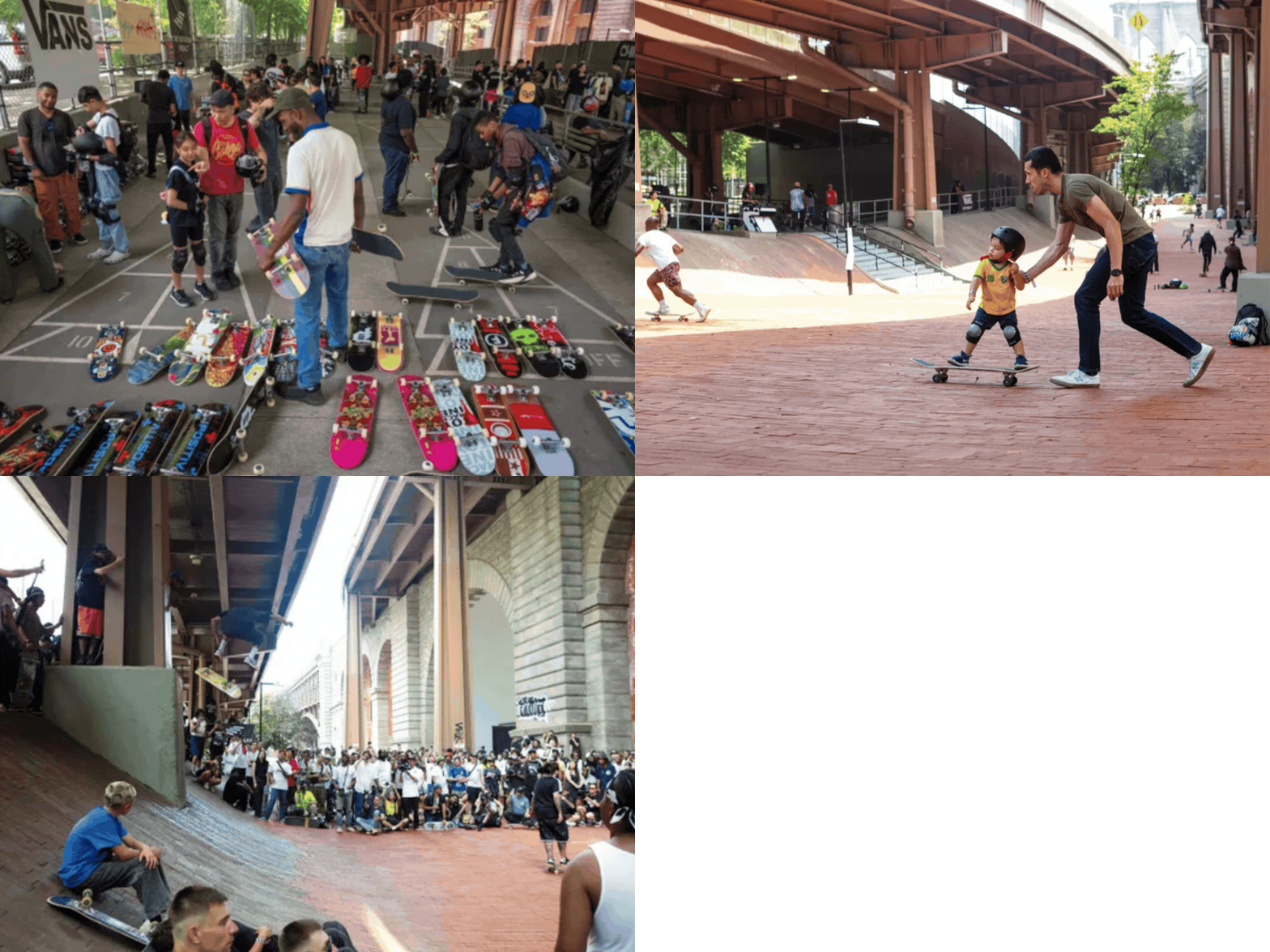
For those who grew up skateboarding in New York in the 1990s, the Brooklyn Banks wasn't just a park. Tucked under the Brooklyn Bridge, the brick embankments, ledges and rails were a proving ground. No security chasing you away, no coaches, no entry fee.
When the city boarded it up in 2004 as a bridge construction storage area, it silenced a space that mattered to skateboarders and the wider community. A decade later, Rosa Chang, Steve Rodriquez and their partners formed a coalition to reopen the space. They took the time through workshops and community forums to learn from locals in Chinatown, the Seaport, and local NYCHA buildings about what the park meant to them and its potential. The plaza was a needed open space in a cluttered downtown and an efficient way to walk between a few adjacent neighborhoods. As skateboarders were always around, locals felt safer with a human presence under the dark plaza passageways of the bridge .
The output was re-imaging the nine-acre site as Gotham Park. A mixed-use public space designed to serve multiple local groups. This included open spaces for children, seating areas for students on lunch breaks, gardens for locals and of course the legendary skateboard elements.
The team from Noble contributed to workshops and taught students from the local UA Maker High School methods to research and design obstacles and park amenities. Improvements included flood-resilient plant beds that double as skatable obstacles. The restored Banks themselves, reopened in 2024 in phases.
The research backs what the community already knew: activated public space is safer public space. Skateboarding has always been an act of reading the built environment differently, finding flow in spaces that weren't designed for it.
WHAT IF… Reclaiming a forgotten space could stitch a community together and make it safer in the process?
HOW WE THINK
Over time, the communities who use informal spaces understand a space in different ways from the original designers. Thinking through how a space may adapt and allowing for flexibility can help expand its potential.
WHAT YOU CAN APPLY
Before you brief a design team, map the direct and indirect users of a place. Who is already there? What are they doing? What trends might impact future conditions? That knowledge should shape the programme, in addition to the consultation process.
3. The Community Centre as a Prototype
Many of us remember the after-school recreation centres. Across the globe, decades of underfunding has minimized what planners now call the third space: not home, not work, but the informal infrastructure of community life.
In Amsterdam, the organisation OVER, initially built around after-school tutoring, has been tasked with reimagining the community centre. Under the leadership of Gijs Hieff, their model is instructive for how they connect with students and communities.
They applied similar methods that teachers and tutors use to better understand the needs in select neighborhoods. They met with families, community leaders, small business owners and elected officials. Along the way they gathered a range of perspectives from new immigrants to established locals.
What they found was that sport, particularly football, functions as one of the fastest social lubricants. A low-barrier, cross-cultural language that works for longtime residents and newer arrivals alike. You learn your neighbours' names on a pitch in a way you rarely do in other settings. These insights are helping shape strategies to get community approvals, raise funding to pilot new spaces and social programs.
The decline of recreational infrastructure reveals a question of social cohesion. These spaces were always about more than sport. They were about having somewhere to belong.
Most cities already know what these spaces are worth. The funding now needs to catch up.
WHAT IF… The community centre was a prototype?
HOW WE THINK
Sport is a delivery mechanism for something fundamental: the conditions for social trust. When we program a space around participation rather than performance, we're designing for the relationships that form around the session and after consultants roll off the project..
WHAT YOU CAN APPLY
Consider the non-sport moments in your favorite sports facility. The changing room, the café, the car park, the waiting area, the stadium exits. These are where community forms. Program and design them with the same intention you bring to the field.
4. When Personal Movement Becomes Civic Infrastructure
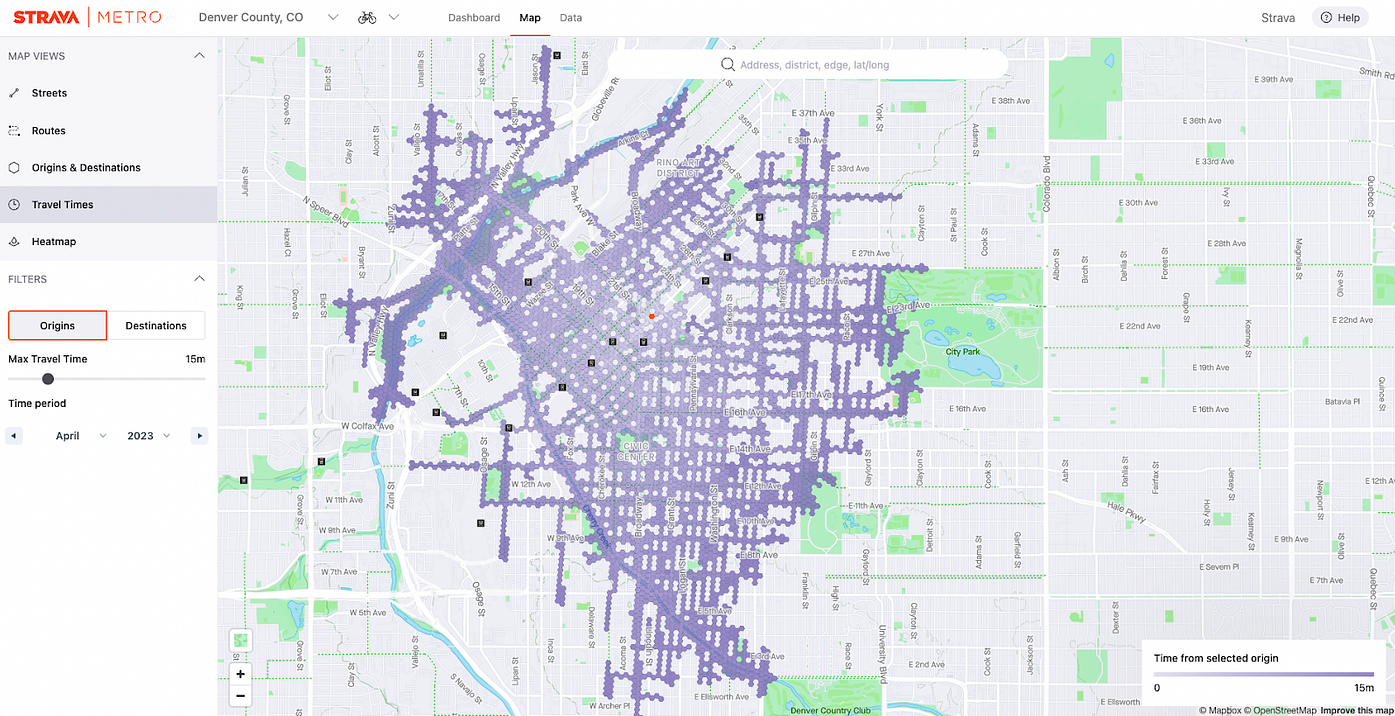
Your morning run generates data. Aggregated with a billion others, that data tells a story and can become something totally new.
Strava Metro anonymises and aggregates activity from runners and cyclists worldwide into heat maps showing where people actually move through cities. Urban planners in Glasgow, Copenhagen, and Portland use this data to decide where to build bike lanes, improve lighting, and locate facilities. Personal optimisation offers a new way to shape how public funds are allocated.
This is one of the most consequential examples of civic-scale design emerging from personal behaviour. And it raises questions we can't look away from.
Platforms like Strava make trackable what is also shareable: road running, road cycling, structured fitness, or even laps at the local pool. But pickup basketball in the park? Skateboarding? Zumba on the waterfront? Some data has been invisible to the algorithm and therefore absent from the data informing infrastructure decisions. Algorithmic place-making rewards certain bodies, certain activities, certain routes. Others are rendered illegible to the systems deciding where investment goes.
At The Place Bureau, we treat this as a design problem and not a technology critique.. If platforms selectively render certain movements visible and others not, what methods do we need to capture the full picture? How do we ensure that informal, community-led, and culturally specific forms of movement aren't systematically excluded when infrastructure decisions are made?
Data is a powerful tool. But it only tells you about the people who were already counted.
When does your fitness routine stop being about you and start being civic infrastructure? Whose movement counts when platforms decide what gets built?
WHAT IF… The way you moved through a city said more about your identity than your zip code?
HOW WE THINK
Data reveals patterns among populations that are already visible to platforms. Our job is to ask who isn't in the dataset, and to design research methods that make invisible movement legible, before the brief is written and the budget is set.
WHAT YOU CAN APPLY
When using movement or behavioural data to inform a project, ask explicitly: which communities are underrepresented in this dataset? What forms of activity are structurally excluded? Commission supplementary research that is qualitative, ethnographic, and community-led to close that gap before it gets built in.
What's Next
This post is the first in our series, exploring sport through three lenses, or layers, from the individual to the global. Each realm connects to the one before, with personal behaviours shaping neighbourhood design, and attracting investment and community involvement. In our next post, we’ll focus on neighborhood planning and stadium innovation opportunities.
We're convening designers, planners, team operators, and practitioners for a virtual workshop in Spring 2026. If you're shaping cities through sport, or shaping sport through cities, this is your conversation.
Sign up at here to receive the full series and workshop details.
Frequently asked questions
How can sports facilities be designed to welcome women and girls?
The article suggests moving beyond a demographic brief and instead asking what prevents anyone from feeling confident enough to use public space. Removing barriers like lack of seating, intimidating sightlines, and signage that assumes prior experience creates a better space for everyone.
What is the Brooklyn Banks and why was it significant?
The Brooklyn Banks was a legendary skateboarding spot under the Brooklyn Bridge in New York City, closed in 2004 for construction storage. It was reopened as Gotham Park through community coalition efforts, serving multiple groups including skaters, locals, and students.
How does Strava Metro help urban planning?
Strava Metro anonymizes and aggregates activity data from runners and cyclists, creating heat maps that show where people actually move through cities. Urban planners in cities like Glasgow, Copenhagen, and Portland use this data to decide where to build bike lanes, improve lighting, and locate facilities.
What role does sport play in community building according to the article?
Sport functions as a social lubricant and cross-cultural language that builds social trust. Regular participation, low barriers to entry, and shared identity make sports communities effective at creating belonging, similar to traditional social clubs.
Related reading
- From First Pitches to Penalty Kicks
- What’s Next with Noble – Sports, Stadiums & Fan Experience Edition
- What’s Next with Noble: Campus and Mixed Use Spaces
What is Placemaking?
Placemaking is the practice of shaping public spaces to strengthen the connection between people and place—through design, programming, and community. Powered by play, sport, and technology, placemaking turns underused space into shared civic life.
Learn more about Adaptive Placemaking.