




.png)
25 Broadway 10th Floor
New York, NY 10004
The Lead
What gets measured is what gets built
Every terminal and transit agency in the country will tell you it puts passengers first. The honest question is not whether they mean it. It is what they actually measure, because what gets measured is what gets built.
Start with the airport. ACI's Airport Service Quality program is genuinely rigorous: more than 700,000 passenger surveys a year, 50-plus touchpoints, collected on-site and in real time rather than as an online popularity vote. Changi, Incheon, and, on this continent, Toronto Pearson and Dallas/Fort Worth win for a reason. But look at what a modern terminal is optimized to do. Increasingly it is a luxury mall with a runway attached. The calm lighting, the wayfinding that threads you past duty-free stores, the dwell-time analytics: a lot of that design energy goes into slowing you down and opening your wallet, not moving you to your gate. There is a real tension between "Most Enjoyable Airport" and "Easiest Airport Journey," and the traveler watching the boarding clock while lost in a perfumed hallways knows exactly which experience has dominance. It is fine to build a beautiful place. It is not fine to call it passenger-first while the floor plan is engineered to give you just enough anxiety to shop.
Now cross to transit, where the measurement problem is the opposite. US transit lost 23% of its ridership from 2019 to 2024, and for years agencies could not agree on why, or on what would bring riders back. Transit does not only want a lifeline. It needs a scoreboard that proves what a lifeline buys, especially at a moment when fear and anxiety around riding are as high as they have been in a generation.
Underneath both is the same calculation, and it belongs to the passenger, not the operator. The traveler sprinting to a gate and the commuter deciding whether the subway feels safe tonight are asking the same thing: what is the safest, easiest, most legible choice? The systems that win the next decade will be the ones that measure that question honestly, and then get their own bureaucracy out of the way long enough to act on the answer.
For Noble's radar, this is the throughline from "The city as system." Placemaking, data, and passenger experience are not three separate topics. They are one integrated loop: you design a place, you measure how people actually move through it and you make adjustments that favor the passenger. We will keep watching who measures honestly.
Signals From The Industry
PASSENGER EXPERIENCE · AVIATION
What the awards do and do not measure.
ACI's ASQ Customer Experience Awards capture 700,000 passenger voices a year across 50-plus touchpoints, and the winners (Changi, Incheon, Toronto Pearson, Dallas/Fort Worth) earn it. But notice the categories: "Most Enjoyable Airport" and "Cleanest Airport" sit right next to "Easiest Airport Journey." Enjoyment and ease are not the same thing. A terminal built to maximize dwell time and retail spend is not always built to get an anxious flyer to the gate. The metric you celebrate is the building you get.
TRANSIT · AVIATION
Who is the air taxi actually for?
With pilot selections named, the eVTOL bottleneck has moved from the aircraft to siting and finance. But the passenger-experience question is quieter and sharper. Early demos around New York look less like mass transit and more like an expensive helicopter hop to the Hamptons for people who can already skip the traffic. That is a placemaking and equity choice, not just an engineering one. California's CAAMCI is building the integration playbook and Joby is publishing how eVTOLs plug into terminals. Fair enough. But before we build vertiports for the few, it is worth asking whether fixing the AirTrain and the everyday airport-access slog would move more people, more fairly.
TRANSIT · INFRASTUCTURE
A scoreboard, and a talent bottleneck.
Congestion pricing finally gave the beat a hard number (about 300,000 more daily riders), the kind of measurement transit has lacked for years, even as the fiscal cliff forces a new funding paradigm. But funding has become a political weapon: projects get paused, dollars get frozen, and even when they are released the real question is whether enough skilled talent is left in the market to deliver. Money unlocked is not the same as shovels moving.
MICROMOBILITY · NEW YORK CITY
The design debt comes due.
NYC Mayor Zohran Mamdani has issued cease-and-desist orders to Walmart, Amazon, Target, and 40-plus retailers selling illegal, unregulated e-bikes and e-scooters, saying too many lives have been cut short. It is a reckoning a decade in the making. We striped bike lanes across American cities in the 2010s and then wrote almost no rules for who could use them or how fast. Those lanes have quietly been taken over by heavier, faster, genuinely dangerous vehicles. If we were designing them today, knowing what we now know, we would design them differently. The lesson for placemaking: build the rules in from the start, not after the ambulance.
Where We Were
SEGD Xlab Conference
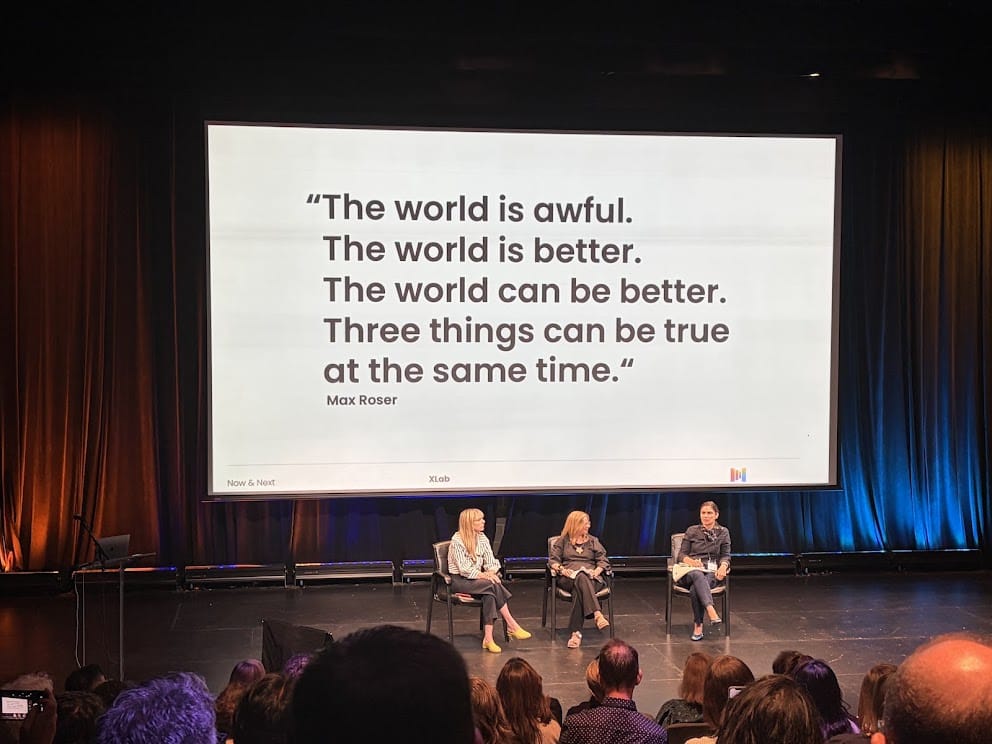
Credit: Paul McConnell
Last month, our own Paul McConnell returned to SEGD Xlab in Brooklyn, a community that’s played a meaningful role in his own journey as a designer.
From AI and creative disruption to the value of getting back into studios and experiencing how ideas are actually made, Paul shares a few reflections on where design is headed and the communities shaping what comes next.
Read his thoughts on the Noble site here.
Noble Project Highlight
Building a Fan Experience Framework with NASCAR
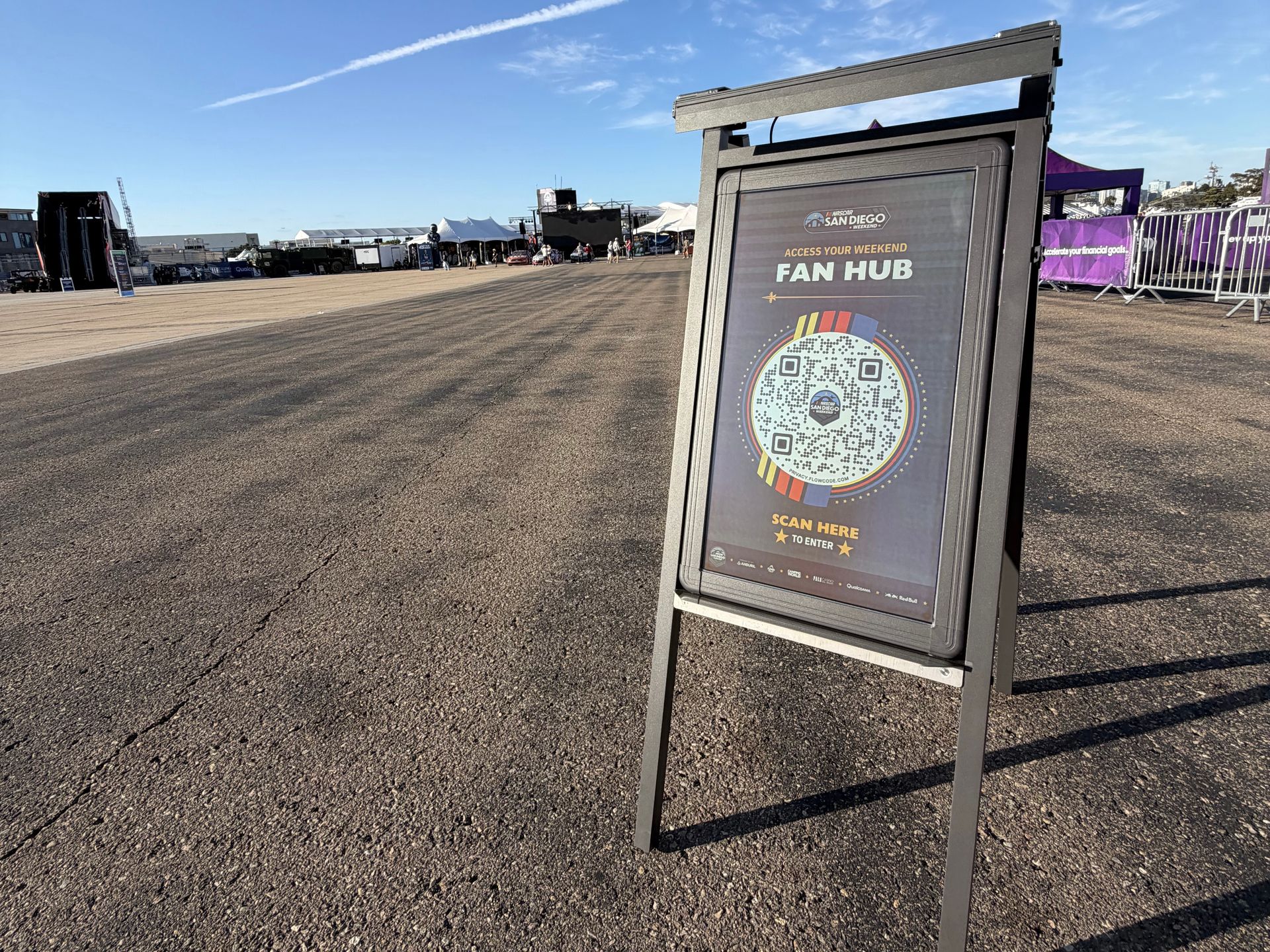
NASCAR operates across dozens of venues (temporary tracks, permanent ovals, urban street circuits) with no two sites alike and, until recently, no consistent way to measure what the fan experience actually felt like. Noble was brought in to help with that.
The San Diego Coronado race in June was our second pilot and first full-scale deployment: 12 modular digital displays across 20 locations, managed remotely in real time through Noble’s Trackboard platform. The site was unusually demanding, a first-time audience on a working naval air station, reached by shuttle and pedestrian bridge. Over the race weekend, the screens logged 125,000 attendees worth of foot traffic and 33,000 map interactions. We partnered with VCONN Digital to rollout the hardware side of the work.
Next Noble x NASCAR Races: Phoenix and Miami
Events To Watch
AVIATION · PHILADELPHIA
ACI-NA Annual Conference & Exhibition
September 14-17, 2026
ACI-NA is the money-and-policy read. The 2026 Annual frames itself around a "unified voice built through consensus," with committee workshops on finance, IT, and environmental affairs. Worth watching for how the funding conversation lands, and whether passenger experience shows up as a line item or an afterthought.
The operator and finance agenda for North American airports. Note: the ACI-NA room block sold out early, so plan lodging now.
AVIATION · NEW ORLEANS
AAAE/ACC Planning, Design & Construction Symposium
March 16-18, 2027
AAAE/ACC Airport Planning, Design, & Construction Symposium is quietly the AAM conference now. Under a banner of "reinventing infrastructure," the symposium (March 16-18, 2027, New Orleans) put Advanced Air Mobility, UAS, and electrification into its Innovation track and threaded decarbonization and resilience through Planning. The builders are signaling where capital, and passenger flow, are heading next.
The builder's room, ~2,000 professionals, with the strongest AAM and infrastructure-delivery tracks of the season.
AVIATION · AMSTERDAM
Passenger Terminal Expo (PTE)
April 6-8, 2027
PTE is where passenger experience gets industrialized. The Passenger Terminal Expo is leaning hard into identity verification, accessibility services, and autonomous airside operations. Read it as the terminal experience readers will be designing around in three years, and as a preview of how much of "experience" is really data and identity infrastructure.
160+ sessions on terminal tech, biometrics, accessibility, and autonomous airside. The passenger-experience horizon.
Thanks for reading. If this sparked ideas, questions, or critiques, we’d love to hear from you. Noble is committed to partnering at a system level – if your culture or civic organization is tackling similar challenges, we’d love to chat. From innovation sprints to full-scale implementations, we help translate big ideas into practical solutions.
Until next time,
The Noble Team